Gamma Quadrant Sectors (S-Z)
Created by Commodore Wilkan Targaryen on Sun May 24th, 2026 @ 2:42pm
Gamma Quadrant Sectors (S-Z)
Stakoron Sector
Sen-Ennis System
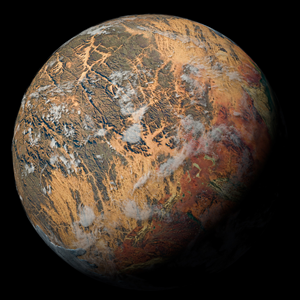 The Sen-Ennis moon, often referred to as the penal moon, occupies a unique and unsettling position within the Olt system of the Gamma Quadrant. Situated only a few hours' travel from the Bajoran wormhole, this terrestrial satellite is classified as a Class M world, characterized by a rocky surface topography that has been softened by significant forestation. Under normal circumstances, the moon would be considered a lush, habitable environment capable of supporting diverse biological life. However, the world has been radically repurposed by an unknown ancient civilization into a self-sustaining, inescapable prison. The physical landscape serves as the stage for a perpetual crucible of conflict, where the natural resources of the forest-rich environment are secondary to the moon's function as a containment zone for the Ennis and Nol-Ennis factions.
The moon’s most defining feature is the sophisticated artificial satellite network that orbits the body, providing the critical energy required to permeate the atmosphere and biosphere with a dense field of nanites. This regenerative field serves as the core of the moon's "miraculous" power, as it is programmed to instantaneously repair tissue damage in any sentient being, rendering death a temporary state and effectively forcing the inhabitants into an involuntary cycle of immortality. The satellite grid serves a dual purpose by generating intense subspace interference that masks the moon from external sensors, preventing unauthorized discovery and protecting the prison from external intervention. While these defenses were sufficient to evade 24th-century technology, the grid has seen significant upgrades in recent years to withstand the capabilities of modern starships.
The biological reality imposed by the nanite field creates an absolute environmental boundary; any resurrected inhabitant who attempts to leave the moon’s atmosphere experiences immediate biological failure, ensuring that the planet remains a total cage. While the Dominion has monitored the moon from a distance, recognizing the potential value of its underlying technology, they have largely limited exploration due to the security risks associated with the unknown architects who designed the grid. Consequently, Sen Ennis persists as a haunting anomaly in the Gamma Quadrant — a Class M world that has been transformed into a perpetual, automated site of containment, defined not by its geography, but by the immutable, technologically enforced reality of its surface.
Stakoron System
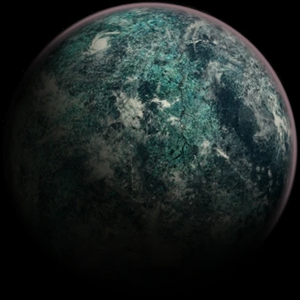 Stakoron II is an industrially significant Class M planet located deep within Dominion-controlled sectors of the Gamma Quadrant. As the homeworld of the Stakoron species, the planet is geologically and resource-rich, serving as the primary source for rare minerals, most notably the highly sought-after mizainite ore. This foundational wealth has established the world as a critical hub for interstellar commerce, drawing continuous interest from various mercantile powers, including the Ferengi Alliance. Despite the planet’s integration into the Dominion’s supply lines, the world has remained a vital focus of regional economic activity for decades, effectively balancing its role as a resource provider with the complex geopolitical demands imposed by the Founders.
The environmental and physical characteristics of the planet are conducive to a stable, industrial society. Recent historical records indicate that the Stakoron successfully stabilized their homeworld following a catastrophic, near-extinction event, a feat that has since become a central pillar of their planetary identity. In honor of this resilience, the surface features specialized cultural infrastructure, including museums and exhibition centers dedicated to celebrating the planet's unique history and recovery. These sites serve as a testament to the planet’s ability to survive and persist through periods of profound crisis, transforming the world from a site of near-destruction into a stable, enduring anchor for the Stakoron people.
Beyond its industrial and historical significance, Stakoron II maintains an infrastructure adapted to meet the logistical requirements of the Dominion’s administration. The planet’s economy is heavily focused on extraction and export, with its surface dotted by facilities that manage the processing and distribution of raw materials. While the population is effectively governed by the Founders, the planet itself has retained a degree of autonomy in how it manages its internal affairs, allowing the Stakoron to preserve their cultural traditions while simultaneously operating as essential subjects of the Dominion. This unique position allows the planet to continue functioning as a key economic node, with its mineral-rich crust and well-maintained export infrastructure ensuring that Stakoron II remains a relevant and influential world within the broader landscape of the Gamma Quadrant.
Telos Sector
Chalara System
 The Chalara system is a serene and isolated star system located within the Gamma Quadrant, existing entirely outside the jurisdictional reach of the Dominion. Anchored by a stable, medium-sized primary star, the system consists of an orderly arrangement of planetary bodies that have remained largely undisturbed for eons. Because the system is situated far from the primary trade routes and lacks the strategic resources sought by expansionist powers, it has served as a quiet, untouched environment for its native inhabitants. Its orbital architecture is characterized by a series of rocky inner worlds and a gas giant that acts as a gravitational anchor, maintaining the long-term stability of the system’s inner orbits.
The centerpiece of the system is Chalara II, a Class M planet that represents the primary focal point of life in the region. Unlike the highly developed or industrialized worlds of the Alpha Quadrant, Chalara II is defined by a landscape of vast, pristine forests, sprawling grasslands, and shallow, crystal-clear freshwater basins. The planet’s climate is temperate and stable, supported by a dense, life-sustaining atmosphere and a unique magnetic field that provides consistent protection from solar radiation. The surface topography is dominated by rolling, verdant plains and jagged, mist-covered mountain ranges, creating a diverse set of habitats that have allowed for the evolution of a rich and varied biosphere.
The native population of Chalara II currently exists at a pre-warp level of development, living in integrated, agrarian-based communities that mirror the natural contours of the landscape. Their society is deeply rooted in the planet’s seasonal rhythms, with architecture designed to utilize local materials and integrate seamlessly into the surrounding environment. Without the technological means for spaceflight or large-scale planetary resource extraction, the inhabitants have maintained a sustainable, localized existence that has preserved the planet’s ecological integrity for millennia. As an independent, pre-warp world, the Chalara system remains an essential, uncorrupted example of natural evolution in the Gamma Quadrant. It stands today as a rare, enigmatic sanctuary — a peaceful, self-contained world thriving in its own isolated corner of the galaxy, completely shielded from the political turbulence and technological pressures that define the broader interstellar landscape.
Telosar System
The Telosar system is a desolate, rugged stellar neighborhood situated deep within the Gamma Quadrant, existing well beyond the operational borders of the Dominion. At the heart of this system lies a volatile, aging G-class primary star that has begun to exhaust its nuclear fuel, resulting in a fluctuating solar output that renders the entire planetary environment hostile to long-term biological survival. The system lacks any habitable zones, as its orbital architecture is dominated by a series of barren, scorched planets and highly erratic debris fields. Because of these extreme conditions and the total absence of atmospheric or liquid water resources, the system has remained entirely uninhabited throughout its history, serving only as a quiet, hazardous waypoint for automated survey probes and rare, short-range exploratory vessels.The innermost region of the Telosar system is characterized by a trio of iron-rich, rocky planets that orbit dangerously close to the primary star. Subjected to intense, uncontrolled solar radiation and gravitational tidal locking, these worlds possess cracked, obsidian-like crusts and have been stripped of any primordial atmospheres. Geological activity here is limited to the cooling of ancient lava flows, which have solidified into vast, featureless plains of basalt and metallic slag. Further out, the system transitions into a chaotic expanse dominated by a gas giant that lacks stable moons, instead possessing a ring system made up of captured asteroids and volatile ice fragments. This gas giant’s massive gravitational influence frequently disrupts the orbits of smaller objects in the outer system, preventing the formation of any regular planetary patterns and ensuring that the entire region remains in a state of constant, orbital flux.
The outskirts of the Telosar system are shrouded in a cold, permanent twilight, filled with long-period comets and drifting clouds of ionized dust. This deep-space environment is largely impenetrable to standard navigation, as the lack of stable celestial bodies makes consistent sensor readings nearly impossible. Despite its lack of life and industrial utility, the system is notable for its raw, geological composition, offering a rare glimpse into the terminal stages of planetary formation and stellar decay. For those navigating the fringes of the Gamma Quadrant, Telosar stands as a stark, empty monument to the inhospitable nature of deep space, serving as a reminder that not all corners of the galaxy are destined to support the emergence of life or civilization.
Torad Sector
Talu System
 Talu is a moonless, Class P glacial world situated deep within the Torad Sector of the Gamma Quadrant. Orbiting a high-intensity white star, the planet is a crystalline wasteland of desolate, frozen plains that function as a natural mirror, amplifying solar radiation to levels capable of causing permanent retinal damage to most humanoids. The surface is characterized by a state of constant "Clear-Snow," where high-velocity winds whip microscopic ice shards across the terrain, reducing sensor accuracy and making transit hazardous. The indigenous Talu are a resilient, fur-covered species evolved with a specialized four-eye visual system; two eyes are tuned to the blinding surface glare, while two operate in the infrared spectrum, allowing them to navigate their massive, life-sustaining subterranean cities.
Economically, the Talu are master miners, harvesting the rare Talu Pearl from deep within the planetary glacial shelves. These formations are vital to the Dominion’s regional infrastructure, as they are essential components for advanced communication arrays and high-frequency sensor nets. Despite this subservience, the Talu recently faced a systemic catastrophe. In 2439, a "resonant fracture" disease ravaged the population, caused not by weaponized treachery, but by a localized architectural failure. Illegal mining had fractured a critical sub-surface mountain range that generates the natural resonance field the Talu require for biological stability. Ironically, synthetic polymers from a discarded Starfleet uniform jacket acted as an unwanted conductor, distorting the resonance frequency and inducing lethal cellular vibration among the populace.
The situation rapidly deteriorated when the Dominion arrived to offer an emerald aerosol stabilizer in exchange for absolute mineral rights to the planet’s core. The Enterprise, led by Commodore Wilkan Targaryen, intervened through a high-risk diplomatic and tactical gamble. Utilizing a Coaxial Induction Drive micro-jump and a ship-wide holographic lattice, the Enterprise masqueraded as the Terran Empire warship ISS Millennium. By appearing as a hostile ghost from a mirror universe, the Enterprise successfully exploited Dominion confusion. While the Vorta hesitated under the threat of a Terran ultimatum, the crew utilized the main deflector as a cosmic tuning fork to pulse a stabilizing corticosteroid and heuristic repair code into the atmosphere. This maneuver repaired the mountain range’s vibrational state, cured the population, and forced the Dominion fleet to retreat. Although the planet remains a strategic hub for Dominion logistics, the Talu survived, left with a wary respect for the "Terrans" who had preserved their fragile world.
Torad System
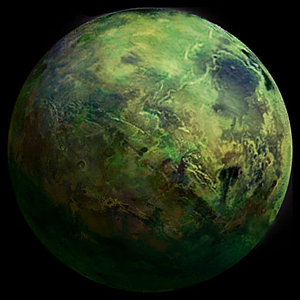 The Torad system is a quiet, independent stellar neighborhood located within the Gamma Quadrant, existing as a peaceful region untouched by Dominion administration. Centered around a stable K-class star, the system provides a consistent, reliable environment for its planetary bodies, fostering a calm celestial landscape far from the turmoil of the galaxy’s more contested zones. Because the system is relatively secluded, it has remained a primary focus for scientific research, particularly as a destination for the Gamma Quadrant Bio-Survey between 2369 and 2375. This survey helped map the system’s orbital characteristics and provided a baseline for understanding the biodiversity and geological development of worlds in this remote sector.
The most notable world in the system is Torad V, the fifth planet in orbital sequence. Torad V is a temperate, habitable world known for its high degree of biological and botanical complexity. The planet has long been of interest to scientists and academic institutions — including the Bajoran Institute of Science — for its unique native flora and the profound botanical mysteries contained within its ecosystems. Unlike many worlds that have been ravaged by industrial development or warfare, Torad V has remained largely in its natural state, characterized by dense, thriving jungles and undisturbed microclimates that offer researchers a pristine environment to study evolutionary biology and rare plant life.
The system serves primarily as a destination for scholarly endeavor and independent exploration rather than commerce or military deployment. While its location near the Bajoran wormhole makes it accessible for scientific expeditions, the system remains a quiet, low-traffic zone. The relative stability of the K-class primary ensures a predictable seasonal cycle for Torad V, which contributes to the longevity and health of its vast, temperate jungles. While the planet is a site of significant scientific potential, it is also a reminder of the fragility inherent in deep-space exploration; the risks of transit through unmapped corridors remain a constant factor for those venturing toward the system. Today, the Torad system persists as a vital, albeit unassuming, center for botanical inquiry, serving as a peaceful landmark for those dedicated to unlocking the mysteries of the Gamma Quadrant's natural heritage.
Umbral Sector
M'brii System
The M'Brii system is a notable star system situated within the Umbral sector of the Gamma Quadrant, existing as a rare, sovereign region that remains entirely independent of Dominion control. Anchored by a stable, long-lived star, the system provides a consistent gravitational and thermal foundation for its two primary terrestrial bodies, creating a unique environment where two distinct, sentient species have developed and flourished in close proximity. Unlike many systems in this region of space that have been subsumed by the expansionist agendas of larger powers, the M'Brii system has maintained a long-standing tradition of autonomy and peaceful coexistence, serving as a beacon of stability and diplomatic success in the otherwise turbulent landscape of the Gamma Quadrant.The system’s orbital architecture is defined by the presence of two M-class planets, each offering the temperate climates and stable atmospheric conditions necessary to support complex, sentient life. The first of these worlds is the homeworld of the M'Brii, a planet characterized by vast, sprawling archipelagoes and a unique, mineral-rich crust that has fostered the development of a highly sophisticated, surface-dwelling civilization. The second M-class world is occupied by the Gaharians, a species whose societal evolution has mirrored that of their neighbors. Both planets benefit from the system's moderate stellar radiation, which supports lush, diverse ecosystems across their respective landmasses, ranging from deep, temperate forests to vast, fertile plains. The close orbital distance between these two worlds has facilitated a history of frequent interaction, allowing both societies to develop mutually beneficial trade routes and collaborative scientific initiatives.
The diplomatic relationship between the M'Brii and the Gaharians is one of the system’s most defining features, characterized by long-term cooperation and a commitment to shared prosperity. By maintaining open lines of communication and a unified stance on regional neutrality, both species have managed to shield their system from the encroachment of external threats. This cooperative spirit is visible in the system’s infrastructure, which includes joint orbital facilities and a shared network of deep-space communication relays that connect the two worlds. As an independent star system that has successfully navigated the challenges of the Gamma Quadrant, M'Brii stands as a testament to the endurance of localized sovereignty. It remains an enigmatic and peaceful corner of the Umbral sector, offering a rare, pristine look at a binary-inhabited system thriving through cooperation rather than conflict.
Umbral System
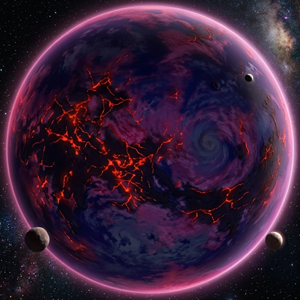 The Umbral system is a strategically significant and geopolitically unique star system located deep within the Gamma Quadrant. Anchored by a singular, stable primary star, the system functions as a quiet nexus of intense secrecy and clandestine activity. Unlike the contested or militarized sectors common to this region of space, the Umbral system has maintained a long-standing policy of strict non-interference, allowing it to serve as a deep-cover base for remnants of the Romulan Star Empire, trapped there since before the Dominion War. Its orbital architecture is stable, providing a consistent environment that has facilitated the growth of secretive outposts and subterranean research facilities across its planetary bodies, all shielded from the prying eyes of the Alpha Quadrant powers and the Dominion alike.
Umbral Prime is informally known as the "Shadow World" due to the unique orbital positioning of the planet relative to its primary star, which ensures that rays of light never completely reach its surface. This perpetually dark environment creates an atmosphere of constant gloom, where the lack of direct solar radiation forces all life to adapt to an existence defined by shadow and bioluminescence. The planet itself is a dense, terrestrial world covered in thick, overgrown jungles and aggressive, predatory flora that have evolved to thrive in the permanent twilight. Umbral Prime was once the site of a clandestine Romulan Star Empire colony, and today, the remaining population has transformed this world into a highly secure, independent redoubt. The inhabitants operate primarily from extensive, ecologically integrated subterranean cities that prioritize defense and isolation over outward expansion.
The geology of Umbara is rich in rare metallic reserves, which the colony has carefully exploited to maintain their self-sufficient infrastructure. Beneath the planet's mountainous surface, hidden networks of tunnels and high-security chambers utilize advanced sensor-cloaking technology to ensure the colony’s footprint remains undetectable to passing vessels. The residents operate with a high degree of autonomy, maintaining their own internal security and logistical support while keeping their existence a closely guarded secret. By operating as an independent, deep-cover enclave, the Umbral system persists as a vital, silent corridor, standing as a testament to the enduring, clandestine influence of the Romulan legacy within the unexplored reaches of the Gamma Quadrant, where the eternal darkness of the Shadow World provides the ultimate shroud for those operating beyond the reach of galactic empires.
Vandros System
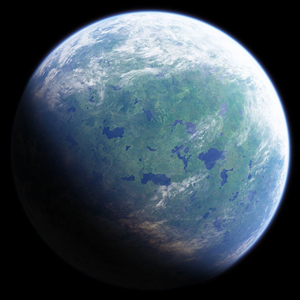 The Vandros system is a strategically isolated star system located on the remote fringes of the Gamma Quadrant, anchored by a stable M-class primary star. While it operates outside the direct administrative reach of the Dominion, the system functions as a quiet repository for ancient galactic history, largely defined by the presence of its fourth planet, Vandros IV. This Class M world is of immense archaeological interest due to its profound connection to the Iconians, an extinct and highly advanced civilization that inhabited the world and the surrounding sector over two hundred thousand years ago. This legacy of technological relics continues to draw the attention of interstellar powers, as the planet represents a critical node from an era when the Iconians maintained level-nine surveillance over nearby worlds like Hoek IV and Sampalo, utilizing the region as a bridge for their historical expansion.
The surface of Vandros IV is home to extensive ruins of an ancient Iconian city, containing architectural and technological marvels that have remained a focal point of intense scrutiny. The most notable feature within these ruins is the remnants of Iconian gateway technology — a powerful, instantaneous transport system that has frequently become a target of conflict. In 2372, the rediscovery of an intact gateway temporarily transformed the system into a flashpoint of political instability, as rogue elements attempted to leverage the machinery to alter the regional power dynamics. Although this gateway was eventually destroyed by a joint effort of Starfleet and Jem'Hadar forces, the ruins remain a silent witness to a time when the Iconians looked out across the stars from this remote sanctuary.
Despite its historical depth, Vandros IV possesses a terrestrial environment with the atmospheric and geological stability required to support complex biological life, much like other isolated, habitable bodies in the galaxy. Its proximity to the Lantar Nebula and its position on the frontier of Dominion space reinforce its status as a vital waypoint for those navigating the unexplored corridors of the quadrant. It stands as a testament to vanished civilizations, marking a significant intersection of ancient history and the modern geopolitical struggles that define the vast, uncharted reaches of the Gamma Quadrant.
Yadera Sector
Varala System
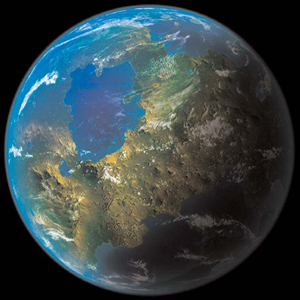 Varala is an inhabited planet located in the Gamma Quadrant, serving as the homeworld for the Varalan civilization. The planetary system is a binary system, orbiting both a G-class and a K-class star, which creates a stable, long-term stellar environment conducive to the development of complex life. The physical geography of the world is distinguished by two primary landmasses: a northern continent and a southern continent. These expansive continental regions have been extensively modified over centuries of industrial and agricultural development, resulting in a landscape that, by the 24th century, was thoroughly dominated by widespread urban centers and farming districts.
The ecological footprint of the Varalan civilization is highly pronounced, with the planet’s natural state being largely transformed to accommodate the needs of its dense population. According to historical observations from the 22nd century, the surface is characterized by a sprawling network of cities and agricultural zones that have systematically displaced native flora and fauna. Large-scale infrastructure projects have fragmented natural habitats, leaving little room for wild ecosystems, such as those occupied by indigenous species like the volg. This relentless expansion has essentially converted the majority of the planet’s surface into an artificial landscape, where the demands of the Varalan society dictate the environment’s utility. The resulting world is one of industrial efficiency, where the original, wild character of the planet has been sacrificed for the sake of sustained habitation and resource production.
Despite its importance as a regional power and homeworld, Varala has remained largely isolated from the broader galactic community, with no recorded visits by the United Federation of Planets as of the late 24th century. The planet persists as a closed system, its development trajectory driven entirely by internal forces rather than external trade or diplomatic exchange. The environmental equilibrium of Varala is currently a product of centuries of intensive human-like occupation, creating a world where the boundary between nature and civilization has all but vanished. It stands as a prime example of a planet that has been fully integrated into the life cycle of its dominant species, existing as a heavily settled and deeply managed environment within the Gamma Quadrant.
Yadera System
 Yadera Prime, a Class M planet orbiting a G-class star, serves as the ancestral homeworld of the Yaderan people. Located within the Gamma Quadrant, the world was once a celebrated jewel of a burgeoning interstellar civilization that had achieved warp capability as early as the year 2200. Before the Dominion conquest in 2340, the planet was characterized by an idyllic urban landscape defined by vertical architectural arrangements. These structures were uniquely decorated in vibrant rainbow colors, symbolizing a social philosophy that valued communal thriving over individual achievement. The surface was replete with public civic utilities, cultural amenities, and open spaces designed to uplift the well-being of every inhabitant, reflecting a society that prioritized equity and public service as its core environmental and architectural tenets.
Following the Dominion invasion, the physical landscape of Yadera Prime underwent a systematic and brutal transformation. The Dominion razed numerous theaters, schools, and cultural centers deemed "non-essential," replacing them with structures serving the regime’s military and technological objectives. The capital city of Yangol, once a symbol of public unity, saw the introduction of the "Splendid District," a highly fortified, restricted complex surrounded by lethal force fields. This district now stands as a primary hub for Dominion-mandated research, concentrating the planet’s scientific resources into the development of advanced weaponry, including artificial intelligence, holography, and weapons of mass destruction. The architectural aesthetic of the planet has been stripped of its original diverse color palette and unified under a cold, emerald green hue, which now serves as the visual hallmark of the Technocrat class of scholars.
The environmental impact of Dominion rule extends far beyond the urban core. The planet's resources, once dedicated to cultural and social amenities, are now almost exclusively funneled into large-scale military projects, most notably the development of portable sun-killer bombs. These devastating weapons were tested on the planet's own colonial systems, resulting in the total destruction of eleven inhabited star systems during the iterative refinement of the technology. Today, Yadera Prime exists as a high-security industrial and research stronghold. While the Hur'q Conflict of 2410 brought temporary chaos and later military aid, the planet remains fundamentally altered—a world where the physical structures of a once-compassionate society have been hollowed out and repurposed to serve as the technological engine for the Dominion's expansionist ambitions.
Categories: No categories found