Gamma Quadrant Sectors (J-R)
Created by Commodore Wilkan Targaryen on Sun May 24th, 2026 @ 2:41pm
Gamma Quadrant Sectors (J-R)
Kar Sector
Atan System
 Atan, a Class M planet located in the Kar Sector of the Gamma Quadrant, is a world whose name signifies "Home" in the Dominionese dialect. Geologically and ecologically similar to Earth, the planet features a lush environment rich in vegetation, aquatic life, and various insect species, though it is notably devoid of large predators or megafauna. Scientific surveys characterize the atmosphere as a breathable mix of 77% nitrogen, 21% oxygen, and 2% carbon dioxide, while the water and soil contain distinct trace elements, including copper, nickel, and lead. First brought to the attention of Starfleet in 2370 during a survey mission involving Benjamin Sisko, the planet became a significant site of early contact with the Dominion, as it was there that Starfleet officers first encountered the Jem’Hadar and the Vorta.
The planet’s history as a neutral survey site changed drastically in the late 24th century. Following a high-stakes rescue operation led by the crew of the USS Enterprise-H, Atan was transformed into a sanctuary for a displaced population of Vorta survivors. These individuals had been discovered living within a massive, space-faring biological entity known as Tchema, having built a primitive and isolated society following a shipwreck that occurred generations prior. When the biological entity’s health began to decline, the Enterprise-H successfully evacuated the Vorta refugees. Recognizing their lack of ties to the contemporary Dominion and the humanitarian imperative to provide them with a stable future, the crew facilitated the establishment of a new colony on the surface of Atan.
The relocation of these refugees has not been without geopolitical tension. In 2439, subsequent rescue operations regarding Vorta survivors — particularly those disconnected from the modern Dominion — have placed Starfleet commanders in direct conflict with administrative authorities like Project Longshot. Despite directives to return such populations for bureaucratic processing, the humanitarian efforts of Starfleet officers have prioritized the preservation of these isolated communities. Today, Atan stands as a unique testament to survival, serving as a peaceful refuge for a people who, having been forgotten by their creators, have successfully cultivated a new existence under the protection of the Federation.
Kartan System
The Kartan system is a dynamic and relatively isolated stellar environment located within the Gamma Quadrant, existing outside the administrative oversight and military reach of the Dominion. Anchored by a central F-type main-sequence star, the system boasts a remarkably stable orbital configuration that has allowed for the development of several distinct planetary bodies. Because of its independence and relative lack of strategic military value, the Kartan system has long remained an uncharted frontier, serving as a rare sanctuary for independent explorers and scientific organizations seeking to study planetary systems that have evolved without the homogenizing influence of the Founders. Its stellar output provides a consistent, life-sustaining energy flow that supports a diverse array of climates, ranging from frozen, airless outer moons to temperate, resource-rich inner planets.The primary world of the system, Kartan II, is a lush Class M planet that serves as the centerpiece of the local environment. Unlike the arid or volatile worlds more commonly found in this sector of the quadrant, Kartan II features an extensive hydrologic cycle characterized by massive, interconnected archipelagoes and shallow, nutrient-dense inland seas. The planetary crust is geologically mature, with low tectonic activity that has permitted the formation of vast, stable landmasses covered in ancient, sprawling forest ecosystems. The planet’s atmosphere is notably dense, creating a humid and highly oxygenated climate that has supported the growth of massive, long-lived flora. Observations suggest that the planet’s magnetic field is unusually strong, effectively shielding the surface from stellar flares and creating an environment where delicate biological life can thrive over immense geological timescales.
Beyond the habitable zone of Kartan II, the system includes two outer gas giants that act as gravitational sentinels, shielding the inner system from the influx of interstellar debris. Each of these giants is surrounded by a complex network of icy satellites, many of which contain frozen deposits of volatiles and trace elements vital for long-term deep-space exploration. These moons are often the target of independent mining ventures, though the lack of any centralized planetary government keeps such operations small-scale and environmentally localized. The Kartan system remains an essential, autonomous waypoint for travelers navigating the fringes of the Gamma Quadrant. By preserving its independence, the system continues to function as an untouched relic of natural stellar evolution, providing researchers with a pristine look at the mechanisms of planetary stability and biological resilience in the vast, unexplored reaches beyond Dominion space.
Kar-Telos System
The Kar-telos system is a strategically situated star system located within the Gamma Quadrant, positioned less than ten light-years from the Bajoran wormhole terminus. Dominated by a brilliant, high-energy B-class primary star, the system functions as a critical navigational waypoint for vessels transiting between the Alpha and Gamma quadrants. Its stellar environment is characterized by intense radiation and gravitational complexity, largely driven by the high mass of its central star. Unlike many sectors in the surrounding region, Kar-telos remains independent of Dominion jurisdiction, maintaining its status as a neutral zone that has occasionally served as a refuge or transit point for independent freighters and starships navigating the fringes of Dominion-controlled space.The most defining physical feature of the Kar-telos system is a dense, expansive asteroid belt that circles the inner orbital path of the B-class primary. This belt is composed of a vast collection of metallic and silicate debris, the remnants of a planetary formation process that was interrupted by the high gravitational pressures of the central star. These asteroids are frequently utilized by passing starships for tactical maneuvers, as their dense concentrations provide significant cover and interference against long-range sensor arrays. The belt serves as a treacherous but invaluable navigation challenge, requiring precision piloting for any vessel attempting to traverse its inner regions. The erratic orbital paths of the debris provide a continuously shifting environment, making the system a challenging landscape for both exploratory survey missions and defensive fleet operations.
Beyond its asteroid-strewn interior, the Kar-telos system is known for its role as a transit node in more unconventional avenues of galactic travel. In 2376, the system was identified as a focal point for the use of ancient Iconian Gateway technology, which allowed for instantaneous transport across vast interstellar distances. This event solidified the system's reputation as a location of scientific and historical curiosity, drawing researchers and recovery crews interested in the implications of advanced transport anomalies. Despite its proximity to major trade routes and its recurring presence in the flight paths of Starfleet and civilian vessels, Kar-telos remains largely uncolonized. It persists as a stark, rugged environment where the brilliance of its B-class star illuminates a landscape of raw orbital debris and ancient, mysterious corridors, serving as a vital and enduring landmark in the geography of the Gamma Quadrant.
Uleon System
 The Uleon system is a compact, independent star system located within the Gamma Quadrant, existing entirely outside the influence of the Dominion. Anchored by a stable, singular primary star, the system serves as a quiet celestial backwater that has remained largely disconnected from the broader interstellar community. Its architecture is characterized by a series of rocky inner planets and a larger, outer gas giant, which provides a gravitational buffer for the inner system. Because the system is devoid of high-value industrial resources and lacks a warp-capable civilization, it has escaped the scrutiny of the Dominion’s expansionist forces, allowing its inhabitants to develop in total isolation from the technological advancements occurring elsewhere in the quadrant.
The heart of the system is Uleon Prime, a desert world orbiting its host star at a distance that maintains a stable, high-heat climate with a surface dominated by vast, arid dune seas and expansive, rocky wastes. The world’s geology is defined by silicate sands and deep, wind-sculpted mesa formations, which rise from the desert floor to create jagged, sun-scorched horizons. Water is extremely scarce, with surface moisture restricted to rare, deep-subsurface veins and sporadic subterranean pools, necessitating that any local development remains focused on moisture collection and specialized habitat construction. The atmosphere is thin and dry, creating intense, blinding light during the day and rapid, biting cold as soon as the sun dips below the horizon.
The indigenous population of Uleon Prime remains at a pre-warp level of development, living in scattered settlements that rely on primitive technology and traditional survival methods. Their society is adapted to the extreme aridity of the planet, with architecture focused on mitigating the harsh, direct solar radiation and utilizing the planet's unique thermal cycles. Because the population has yet to achieve the means of interstellar travel or large-scale industrialization, they possess no formal diplomatic status within the Gamma Quadrant. Consequently, Uleon remains an untouched, pristine example of an isolated, evolving world, existing as a distant, desert-bound enigma within the quiet corners of the quadrant, shielded from the turbulence of the surrounding galaxy by the vast, empty reaches of space.
Kendari Sector
Kendi System
The Kendi system is a tactically significant binary star system located within the deep interior of the Gamma Quadrant, serving as a critical operational node under the firm administration of the Dominion. Anchored by two distinct stars — a luminous M-class primary, formally designated Kendi, and its secondary K-class companion — the system exhibits complex gravitational dynamics that have been meticulously mapped for strategic navigation. Because of its pivotal location and its role as a secure logistics hub, the system is permanently assigned a dedicated Jem'Hadar outpost. This installation functions as a forward command-and-control center, providing essential oversight for Dominion patrols and maintaining a constant defensive presence in the surrounding sector.The planetary architecture of the Kendi system is dominated by the gravitational influence of its two suns, which has resulted in a collection of hardened, resource-rich worlds that are well-suited for supporting a long-term military presence. While the interior orbits are often subjected to the intense radiative environments typical of binary systems, the outer reaches contain several stable, rocky bodies that have been repurposed by the Dominion to house support infrastructure. These facilities include automated repair bays and refueling depots that allow Jem'Hadar warships to maintain a constant patrol cycle without needing to return to major fleet staging grounds. The outpost itself is a heavily shielded, utilitarian structure, designed for maximum defensive efficiency rather than comfort, mirroring the Spartan philosophy that defines the Jem'Hadar military doctrine.
The system’s importance was underscored in 2372, when a patrol group of Jem'Hadar warships departed from the Kendi outpost to conduct a long-range sweep of the surrounding sectors, specifically targeting the Obatta Cluster. This activity is indicative of the system’s role as a launch point for regional security operations, where the combination of its binary stars' energy output and its tactical positioning provides an ideal environment for the Dominion to maintain its grip on the quadrant. Though it is not a center for population, commerce, or diplomacy, the Kendi system stands as a vital link in the Dominion’s military architecture. It exists as a stark, disciplined monument to the power of the Jem'Hadar, standing guard over the quiet reaches of the Gamma Quadrant as a silent enforcer of Dominion law.
Teplan System
 Teplan I, also known as the Teplan homeworld, is a Class M planet located within the Teplan system of the Kendari sector in the Gamma Quadrant. Once a thriving center of an advanced, space-faring civilization that defied the Dominion’s early expansion, the planet’s geography was fundamentally altered by the catastrophic consequences of that resistance. During the 22nd century, the planet was a hub of technological innovation and interstellar travel, featuring sprawling cities and sophisticated infrastructure. Following the Dominion’s decision to punish the Teplans rather than engage in traditional conquest, the release of the Teplan blight — a genetically engineered pathogen — ravaged the entire planetary population and its colonies, effectively halting the civilization's development and forcing a regression into a crumbling, post-industrial state.
The physical state of the planet today is a testament to the brutal efficacy of the Dominion's tactics. Most of the Teplan’s sophisticated cities and military bases have fallen into total ruin, stripped of their power and abandoned as the population struggled to survive the blight. The surface is littered with the remnants of a golden age, including derelict military outposts and technological infrastructure that emitted enough electromagnetic radiation to accelerate the disease, causing painful deaths for those remaining. Because the blight reacts to electromagnetic radiation, the survivors were forced to deactivate the vast majority of their technology to minimize the spread and severity of the disease. This resulted in a landscape where the once-modern cities are now ghost towns, existing as crumbling monuments to a society forced to adopt a medieval lifestyle in the shadow of their own extinct potential.
Despite the devastation, the planet maintains its status as an important, albeit tragic, location in the Gamma Quadrant. While Federation medical intervention in 2372 provided an in-vitro vaccine to ensure immunity for future generations, the planet remains ecologically and economically shattered. The lack of active artificial power generation and the ongoing struggle to rebuild scientific and social structures from scratch leave Teplan I in a precarious position. The world continues to be monitored by various powers; its abandoned bases serve as dangerous sites for raiders and smugglers seeking remnants of advanced technology, while the blight itself remains a highly sought-after, if perilous, artifact for organizations interested in weaponization. Teplan I persists not as a vibrant world, but as a silent warning of the costs of resistance against the Dominion, its surface a graveyard of a once-great empire left to slowly fade away.
Klaxinoth Sector
Klaxinoth System
The Klaxinoth system is a remote and enigmatic star system located within the deep interior of the Gamma Quadrant, functioning as a specialized territory under the firm administration of the Dominion. Anchored by a massive, high-energy star that emits a unique spectral signature, the system serves as a key logistical pivot point for Dominion activity in the region. Unlike the highly industrialized or densely populated hubs of the core Dominion domains, the Klaxinoth system remains a largely quiet, low-profile enclave, prioritized more for its strategic geography than for its domestic or commercial output. The system’s orbital path is meticulously monitored by long-range sensors and automated patrol relays, ensuring that the Dominion maintains an absolute security perimeter over the transit lanes that weave through this cluster of stars.The planetary arrangement of Klaxinoth consists of several rocky, terrestrial worlds that exhibit significant geological diversity. The most notable of these is Klaxinoth Prime, a planet that, while largely devoid of natural atmosphere, possesses a crust exceptionally rich in rare, heavy metallic isotopes. These mineral reserves have led the Dominion to establish a series of automated, high-security extraction facilities that operate with near-total autonomy, overseen by a rotating contingent of Jem'Hadar and Vorta administrators. These facilities utilize subterranean harvesting techniques that allow for the efficient retrieval of materials without the need for large-scale surface settlement or the maintenance of civilian infrastructure. The resulting ore is regularly collected by heavy-lift cargo vessels, which transport the refined components to major Dominion shipyards located further within the quadrant.
Beyond its industrial role, the system serves as a tactical "ghost-point" for Dominion fleet maneuvers. The intense radiation emitted by the primary star creates a natural shroud of interference that makes it exceptionally difficult for external sensors to track vessel movements within the system's inner orbits. This environmental quirk has been exploited by the Dominion to stage stealth-capable patrols and clandestine research initiatives away from the prying eyes of neighboring powers. Though the system remains a desolate, inhospitable expanse, it stands as a fundamental component of the Dominion's infrastructure. By integrating the harsh nature of Klaxinoth into their broader grand strategy, the Dominion has transformed an otherwise barren and irradiated system into a vital asset, demonstrating their capacity to harness even the most volatile corners of the Gamma Quadrant for the sustainment of their absolute authority.
Kurill Sector
Kurill System
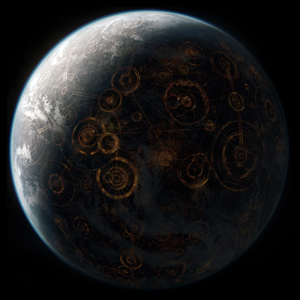 Kurill Prime, located within a binary star system in the Gamma Quadrant's Kurill sector, serves as the primary administrative capital of the Dominion and the ancestral homeworld of the Vorta. While the Great Link acts as the spiritual heart of the Dominion, Kurill Prime functions as its bureaucratic engine, where armies of Vorta mandarins manage governance within vast, nation-sized complexes of cloning facilities, archives, and tactical command centers. The architectural aesthetic of the world is intentionally austere and drab, reflecting the Vorta's lack of creative interest and their limited sense of taste, a trait deliberately cultivated by the Founders as a perpetual reminder of the species' humble origins.
Historically, the Vorta were a primitive, timid species of tree-dwelling, ape-like hominids. Their elevation to their current position was triggered when a persecuted Changeling scout was hidden and protected by a Vorta family. In gratitude, the Founders utilized centuries of genetic engineering to transform the Vorta, granting them sentience and an esteemed place within the Dominion hierarchy. In stark contrast, the original rulers of the planet, the Kurillians, were subjected to the Founders' vengeance; survivors were genetically modified, stripped of their speech and intelligence, and confined to a walled garden to serve as a menagerie. This grim exhibition acts as a cautionary signal to the Vorta that their creators possess the absolute power to revoke their gifts should they prove ineffective or disloyal.
The societal structure on Kurill Prime is defined by relentless competition. Vorta are matured rapidly in womb machines and subjected to daily testing, study, and virtual reality simulations. Only the most successful two percent of each generation survive the initial rounds of "elevation," a process that requires demonstrating mastery in fields ranging from complex administration to strategic deception and betrayal. This focus on service is further reinforced by strict biological controls, including a vastly inhibited sex drive designed to keep the population focused on their duties. The planet also hosts a "hostage center," which keeps VIPs and their families close at hand to ensure the cooperation of newly absorbed species.
The surface of Kurill Prime is almost entirely devoid of recreational space, with the notable exception of the Dominion High Command Fortress. This impossibly tall, neutronium-clad structure is the only location on the planet authorized to host Founders and their select allies. While the world has faced recent threats, including the Hur'q Conflict of the 2410s, it remains a vital node in the Dominion’s infrastructure, sitting strategically along the path between the Bajoran wormhole and the Founders’ homeworld, perpetually reinforcing the dominance of the Founders and the dutiful service of their Vorta servants.
Tchema
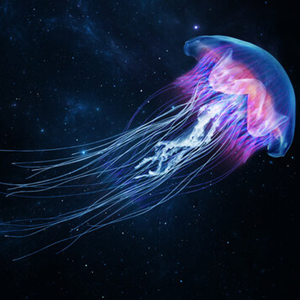 Tchema is an extraordinary spaceborne biological entity, roughly the size of a small starbase, belonging to the rare species known as Farpoint Cnidarians. Resembling a massive Earth jellyfish, Tchema is a sentient, peaceful life-form capable of independent travel through deep space. Its physiology is a marvel of biological engineering, featuring vast, transparent internal chambers that house lush, photosynthesizing forests and various animals, which serve as the creature’s primary source of sustenance. Beyond its physical scale, Tchema possesses complex cognitive abilities, including a capacity for emotions such as anger, joy, and gratitude. It also exhibits a profound affinity for psionic communication, allowing it to telepathically interact with other species, an ability that proved crucial during its first contact with the crew of the USS Enterprise-H.
For over a century, from 2298 until 2439, Tchema acted as an unwitting host to a colony of Vorta refugees. These individuals were the descendants of a shipwrecked crew who established a primitive, isolated society within the creature’s gut biome, building treehouses and walkways among the internal forests. While Tchema was initially parental toward these "guests," the Vorta population eventually grew to a size that caused the creature physical discomfort and distress. This biological tension reached a breaking point when the Enterprise-H investigated a distress signal — the first of its kind to originate from an organic source — and discovered that the creature was requesting asylum from its own inhabitants.
The subsequent evacuation was highly volatile. The Vorta leadership was deeply resistant to leaving their ancestral home, and some younger colonists utilized dangerous telekinetic abilities to repel the Enterprise away teams. Furthermore, extremist religious factions within the colony, who had long positioned themselves as the sole "voice" of the creature, attempted to sabotage Tchema’s central neural cluster to maintain control. Commodore Wilkan Targaryen and his crew ultimately successfully negotiated a resolution and conducted a mass extraction of the Vorta population. Following the rescue, Tchema was freed from its burden and proceeded peacefully into deep space to search for others of its kind. The Vorta survivors were subsequently relocated to the planet Atan, though their transition into the Federation’s care ignited a significant diplomatic confrontation regarding their status as displaced refugees.
Masan Sector
Hymasha System
The Hymasha system is a highly structured stellar enclave located deep within the Gamma Quadrant, serving as a foundational node in the Dominion’s administrative and logistical network. Anchored by a radiant, stable star, the system functions as a controlled environment that highlights the Dominion’s commitment to order, resource efficiency, and total security. Unlike the more desolate or militarized sectors of the quadrant, the Hymasha system has been meticulously curated to serve as a hub for regional coordination. Its orbital paths are tightly regulated, with automated traffic control protocols that ensure only authorized vessels can navigate the transit lanes connecting this system to the neighboring sectors of Dominion space. This high level of oversight is a testament to the system’s importance as a gateway for both inter-quadrant communication and internal supply chain logistics.The planetary arrangement of Hymasha is characterized by a series of temperate, geologically stable worlds that have been carefully surveyed for potential integration into the Dominion’s domestic infrastructure. The most notable world, Hymasha Prime, possesses a rich, varied geography of sprawling coastal plains and deep, mineral-dense mountain ranges. While the planet remains largely devoid of sprawling urban centers, the Dominion has implemented extensive, subterranean agricultural complexes that leverage the planet’s natural fertility to produce surplus biological materials. These facilities operate with autonomous precision, utilizing specialized nutrient-injection systems that allow for high-yield harvests without requiring a significant permanent population of settlers. The result is a planet that serves as a vital, self-sustaining resource depot, feeding the personnel and operational requirements of nearby Dominion outposts.
Beyond its agricultural and logistical utility, the system acts as a secure observation station for monitoring regional stability. Sensors and subspace relays hidden within the system’s outer asteroid belts provide the Dominion with a comprehensive view of surrounding activities, effectively creating a defensive buffer that shields the system from external interference. Despite the quiet efficiency of its operations, the Hymasha system remains a sterile, disciplined environment. It does not invite the chaotic growth or free-form expansion found in the Alpha Quadrant, but instead exists as a perfectly tuned instrument of Dominion statecraft. Standing as a silent, productive monument to the power of planned development, the system persists as an essential link in the Dominion’s grip on the Gamma Quadrant, quietly fueling the machinery of an empire that thrives on stability and control.
Masan System
The Masan system is a stark, secluded stellar neighborhood situated within the deep interior of the Gamma Quadrant, serving as a quiet, functional component of the Dominion’s vast territorial holdings. Anchored by a calm, spectral-type G-class star, the system offers a stable orbital environment that remains entirely untouched by the sprawling urbanization or industrial density found in other parts of Dominion space. Despite its status as an uninhabited frontier, the Masan system is meticulously cataloged and monitored by Dominion long-range sensor networks, ensuring that its void serves as a secure, predictable buffer zone between more vital administrative sectors. The absence of permanent population allows the system to function as a pristine, neutral ground for the Dominion's regional defensive monitoring, effectively keeping the area clear of the complexities associated with civilian governance or local diplomacy.The planetary arrangement of Masan consists of a series of dormant, terrestrial worlds that exhibit remarkable geological consistency. The most significant of these, Masan Prime, is a rocky, silicate-crusted world that, while devoid of a breathable atmosphere or liquid water, possesses a highly stable surface topography. Its vast, sweeping plains of dark, volcanic basalt and deep, quiet impact craters have remained largely unchanged for millions of years, offering a serene yet forbidding environment that is common to the outer fringes of the quadrant. Without the intervention of mining outposts or colonial infrastructure, the planet’s surface remains a blank canvas of geological history, providing a stark contrast to the highly regulated and manipulated environments found in the Dominion’s core worlds.
For the Dominion, the value of the Masan system lies in its inherent emptiness. By maintaining it as an uninhabited expanse, they create a reliable navigational corridor that is easily secured and devoid of external interference. The system’s stillness is punctuated only by the occasional passage of automated patrol craft and the rhythmic pulse of distant subspace relays, which transmit data across the quadrant with cold, mathematical precision. While it lacks the vibrant ecosystems or resource wealth that typically invite exploitation, Masan serves as a fundamental pillar of the Dominion's grand strategy, proving that the silent, barren spaces are just as essential to imperial control as the most productive colonies. It remains a stark, enduring monument to the stillness of the Gamma Quadrant, existing as a perfectly preserved void under the watchful, absolute authority of the Dominion.
New Yadera Sector
New Yadera System
 New Yadera, formally designated as Yadera II, is the second planet in its star system, located in the Gamma Quadrant. As a celestial body orbiting a K-class star, New Yadera is primarily known for its role as a remote refuge following the Dominion's conquest of Yadera Prime in 2340. The planet serves as an example of a world that, while physically stable and capable of sustaining life, remained largely untouched by large-scale colonial expansion, providing a secluded environment for those fleeing the Dominion's oppressive reach. Its status as a destination during the Gamma Quadrant Bio-Survey conducted between 2369 and 2375 highlights its profile as a quiet, isolated world within a region of space that was becoming increasingly dominated by the Jem'Hadar and their masters.
The geography of New Yadera is characterized by natural environments that allowed for the establishment of isolated settlements. Unlike the high-density urban sprawl found on its sister planet, Yadera Prime, the surface of New Yadera consists of varied, rugged terrain that has remained largely free from heavy industrialization. The planet's climate is temperate, maintaining conditions suitable for humanoid life, which facilitated the long-term residence of refugees. While the surface features typical planetary cycles, the most significant aspect of the planet’s recent history is the integration of advanced holographic infrastructure. This technology was deployed across the landscape to create intricate, village-like environments, which allowed inhabitants to live in a controlled, simulated existence designed to replicate the culture and society of their lost homeworld.
The planetary environment functions today as a silent, artificial preserve, held in a state of suspended animation by the legacy of its inhabitants' desperation. The holographic systems that sustain the settlements represent a highly sophisticated use of omicron particle technology, allowing for a seamless integration of light and matter that effectively masks the reality of the planet's desolate seclusion. Because the planet was chosen as a hiding place from Dominion surveillance, the physical infrastructure is unobtrusive, blending into the natural contours of the world’s rocky, quiet expanses. While New Yadera remains a largely overlooked world in the broader political and economic landscape of the Gamma Quadrant, it serves as a poignant reminder of the cultural survival of a displaced people, existing as a hidden sanctuary whose physical reality is shaped as much by the memories of its inhabitants as by the K-class star it orbits.
Trialus (Meridian) System
 Meridian, also designated as Trialus I, is a unique Class M planet located within the Trialus star system in the Gamma Quadrant. The planet is primarily defined by its extreme orbital and dimensional instability, which is dictated by the quantum properties of its host star, Trialus. This F-class star periodically builds up massive amounts of quantum energy, triggering a cascade reaction that forces the planet to shift between our known physical dimension and an alternate realm consisting of pure energy and consciousness. This phenomenon renders the planet invisible and intangible in normal space for the majority of its existence, effectively removing it from the standard continuum.
Historically, the planet’s manifestation in normal space occurred on a sixty-year cycle, though centuries of cumulative instability caused these visits to progressively shorten. By 2371, Meridian remained in our reality for only twelve days, with projections indicating that the window of physical manifestation would eventually shrink to mere minutes. Such a collapse would have rendered the planet unable to stabilize in either dimension, leading to its total destruction. The environment of the planet during its physical phase is relatively standard for a Class M world, featuring temperate forests and terrestrial conditions capable of supporting complex biological life. However, when the planet shifts into its alternate-dimensional state, all biological and physical matter is suspended in a stasis-like existence where inhabitants exist as incorporeal consciousness, capable of communication on a level impossible for typical organic creatures.
In 2371, a scientific intervention by the crew of the USS Defiant successfully analyzed the quantum energy imbalance within the core of the Trialus sun. By adjusting the star’s fusion reactants, the Defiant crew stabilized the quantum cascade, allowing Meridian to re-enter a more stable cycle. Following this intervention, it was projected that the planet’s manifestation in normal space would extend to thirty years, providing a sustainable environment for its inhabitants. Despite this success, probes indicate that other planets within the Trialus vicinity may be susceptible to similar quantum shift phenomena. Consequently, while Meridian remains safe for the foreseeable future, it persists as a rare and isolated celestial anomaly, oscillating between the physical realm and a dimension of pure thought, standing as one of the most enigmatic planets identified in the Gamma Quadrant.
Rakhari Sector
L-S System
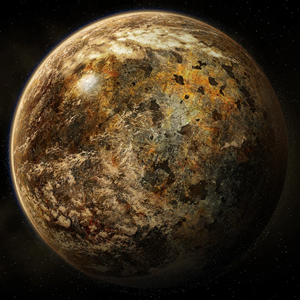 L-S VI is a Class M planet located within the L-S star system in the Gamma Quadrant, situated approximately six light-years from the Bajoran wormhole terminus. Orbiting a K-class primary star, the planet is characterized by a desolate, ruined surface that once hosted an advanced civilization. By the 24th century, the world had been largely reclaimed by the environment, leaving behind mysterious, weathered ruins that serve as the only remaining evidence of its former inhabitants. The planetary surface is geologically active, featuring volatile volcanic regions capable of releasing noxious gases that can affect biological organisms — an environmental hazard that posed significant risks to scientific expeditions attempting to analyze the world’s history.
The ecological state of L-S VI is remarkably unique, dominated by silicate-based lifeforms rather than traditional carbon-based flora and fauna. Among these organisms, explorers discovered small, vegetative entities that exhibit sophisticated metamorphic properties, suggesting a biological link to the rare, shapeshifting physiology typically associated with the Founders. The presence of these metamorphic lifeforms amidst the ancient ruins has fueled intense scientific speculation regarding the planet's origin and its potential connection to the origins of Odo’s species. At the center of these sprawling ruins stands a prominent, enigmatic obelisk, a relic that remains a subject of intense debate among xenoarchaeologists. While some have posited that the structure acts as a definitive link to the Founders, others maintain that it serves only as a misleading anomaly, leaving the true purpose of the site shrouded in mystery.
L-S VI remains a silent, haunting testament to an extinct or migrated society. The planet does not merely hold the structural remains of a past era, but also possesses a distinct, harsh atmosphere that discourages long-term visitation. The prevalence of ground eruptions and atmospheric gases reinforces the sense of a world that has been abandoned to the elements. Despite the challenges of its hazardous climate, the planet’s significance within the Gamma Quadrant remains high, acting as a crucial touchstone for those investigating the biological mysteries of the region. It stands today as an enigmatic site where the boundaries between ancient technology, metamorphic biology, and geologic history converge on a desolate, K-class orbit.
New Bajor System
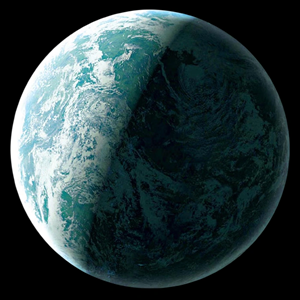 New Bajor is a Class M planet located in the Gamma Quadrant, orbiting a G-class star that provides the world with a stable, Earth-like stellar environment. First colonized by Bajoran settlers in 2370, the planet was selected for its suitability for agriculture and long-term habitation, featuring fertile soil and a climate conducive to the cultivation of native Bajoran crops such as kava and katterpods. The world’s geography is diverse, consisting of rolling plains and varied terrain that supported the construction of significant colonial infrastructure, including sophisticated irrigation systems that allowed the settlers to maximize the productivity of the land. The capital city of New Rakantha serves as the primary urban center, designed to mirror the architectural sensibilities of the Bajoran homeworld, including specialized buildings constructed in the traditional Jarrovian style.
The planet’s history has been defined by periods of intense volatility and struggle. Shortly after its initial establishment, New Bajor became the site of a tragic massacre at the hands of the Dominion’s Jem'Hadar forces, an event that served as a grim signal of the Dominion’s hostility toward Alpha Quadrant encroachment. During this period of occupation, the Dominion repurposed segments of the colony, erecting military facilities and barracks for their own troops, though these structures were abandoned by 2376. Following the departure of Dominion forces, the planet underwent a period of resettlement and revitalization, eventually gaining membership within the United Federation of Planets. This era marked a transition from a vulnerable frontier outpost to a more stable colonial society.
Geologically and atmospherically, New Bajor remains a world of immense potential, with its relatively benign environment allowing for continued growth and development. By the late 2370s, the colony supported a growing population, and its strategic importance as a gateway for Gamma Quadrant research and exploration continued to evolve. Despite the challenges faced during the lead-up to the Dominion War and the subsequent political shifts, including the colony's decision to pursue independence following the 2385 Attack on Mars, New Bajor retains the natural features that originally made it an attractive destination for colonization. It stands today as a testament to Bajoran resilience, representing a physical foothold of Bajoran culture and enterprise established deep within the Gamma Quadrant.
Rakhar System
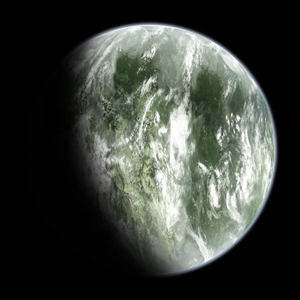 Rakhar is a Class M planet located within the Rakhari sector of the Gamma Quadrant, orbiting a K-class primary star. As the homeworld of the humanoid Rakhari species, the planet serves as a long-standing center of regional authority, particularly through its southern hemisphere provinces, such as Nehelik. Geographically, the planet has supported a stable and human-habitable environment for centuries, allowing for the development of complex social and governmental structures that predate its integration into the Dominion. Its location on the edge of the Dominion’s frontier has positioned it as a strategic vantage point, characterized by a surrounding space that remains exceptionally chaotic and active in terms of interstellar transit.
The environmental conditions of Rakhar are conducive to dense, settled populations, and the planet’s surface is organized into various jurisdictions governed by provincial exarchs. Unlike many other worlds brought into the Dominion fold, Rakhar’s physical landscape and social infrastructure were largely left undisturbed by its new masters. The planet maintains an image of stability and power, which the local leadership uses to facilitate clandestine intelligence-gathering operations for the Dominion. While the surface appears orderly from an administrative standpoint, the planet’s political atmosphere is increasingly strained by the repressive policies of its ruling elites. Despite the external perception of a serene, well-managed world, the interior provinces are marked by a growing internal movement of dissent that frequently challenges the iron-fisted rule of the provincial exarchs.
Beyond its role in regional politics, Rakhar remains a notable point of interest within the Gamma Quadrant for its historical and logistical significance. Although visitors to the planet often find a world where the governance is secretive and aloof, the planet itself continues to function as an integral part of the Dominion’s frontier expansion. The environment of Rakhar remains physically stable, yet it serves as a silent witness to the tension between its absolute authoritarian government and a populace increasingly weary of the restrictive policies that have defined their home for generations.
Xurbam System
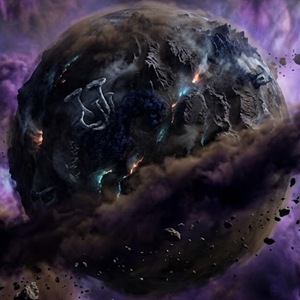 The rogue body discovered within the Chamra Vortex, named Xurbam by the Enterprise crew in honor of the Saltah'na encountered there, is an anomalous Class M planetoid located within the Rakari Sector of the Gamma Quadrant, drifting without a primary star. Ordinarily, a rogue body of its kind should be frozen and lifeless; however, this world’s continued habitability is considered highly unusual, sustained by a dense nitrogen-methane atmosphere, significant geothermal activity, and a powerful greenhouse effect. Deeply hidden inside the turbulence of a Mutara-class nebula, Xurbam initially appears as little more than a gravitational shadow among millions of asteroids and dense pockets of toh-maire gas. Its environment is heavy, metallic, and dimly illuminated by the surrounding nebular haze, presenting a sky that is described as a bruised, muggy brown. The upper atmosphere contains trace ammonia ice crystals and localized carbon dioxide hazards near active geothermal vents, creating conditions that obscure visibility with low clouds and heavy fog.
Geographically and biologically, the planetoid's surface is dominated by a strange chemotrophic ecosystem that is sustained by geothermal heat rather than sunlight. While the surface pressure remains close to standard humanoid tolerance levels, the atmosphere contains elevated methane and argon, and the unpredictable thermal changes, chemical particulates, and toxic spores render the environment visually striking yet extremely hazardous for away teams. The terrain is defined by dense indigo moss that forms deep vascular mats across the ground, responding to pressure and damage almost like a nervous system. Interspersed within this moss are slick rock ridges, geothermal fissures, and towering fungal structures that rise like pale skeletal hands, some varieties of which exhibit carnivorous traits and react to touch. This unique chemotrophic ecosystem ensures that while Xurbam is technically survivable with appropriate precautions, it poses significant and constant risks.
The planetoid stands as an isolated, lightless, and biologically hostile graveyard world: beautiful, habitable, and profoundly dangerous. Though not suitable as a settled world, Xurbam remains strategically notable as a natural hiding place. Its location within the Chamra Vortex presents severe operational challenges, as the nebula effectively masks sensor readings, communications, and transporter locks, making approach and extraction exceptionally difficult. This protective obscurity has given the world a historical significance as a place of unintended confinement; ancient wreckage embedded deep within its fungal growth—including artifacts tied to the Saltah'na—suggests the planetoid served as an accidental prison or refuge for centuries. Isolated and dangerous, Xurbam remains an anomalous and formidable presence within the Rakari Sector.
Categories: No categories found