Gamma Quadrant Sectors (A-I)
Created by Commodore Wilkan Targaryen on Tue Mar 10th, 2026 @ 10:00pm
Gamma Quadrant Sectors (A-I)
Baen Sector
Baen System
The Baen system is a remote, desolate stellar enclave situated deep within the Gamma Quadrant, currently under the direct jurisdiction of the Dominion. Anchored by a massive, aging G-type star, the system exists in a state of perpetual quiet, as its orbital configuration offers little in the way of resource wealth or strategic value. The system is entirely uninhabited, lacking the biological or industrial infrastructure that typically characterizes Dominion-controlled territory. Instead, it serves as a secluded navigational waypoint, monitored by periodic automated sensor sweeps to ensure that no unauthorized vessels breach its perimeter. Because of its lack of development, the system remains a vacuum in regional galactic logs, known primarily for its harsh, unforgiving celestial mechanics rather than any tangible assets.The system’s primary interest lies in Baen Prime, a rugged, terrestrial world that, while physically capable of sustaining a stable orbit, remains devoid of any atmosphere or liquid water. Its surface is characterized by vast, cratered basins and high-altitude mountain ranges composed of dense, volcanic basalt, which have remained untouched for millions of years. Geological analysis suggests that the planet underwent intense tectonic activity in its early formation, leaving behind a scarred, featureless landscape that offers no shelter or utility for even the most hardy settlers. Further out, the system contains several icy, gas-rich outer planets that are subjected to the intense gravitational instability of the primary star, preventing the formation of stable moons or rings. These outer bodies are little more than drifting masses of frozen volatiles and ionized dust, perpetually cold and light-years away from any significant stellar heat.
For the Dominion, the Baen system acts as a forgotten frontier, maintained only to project authority over the outer reaches of their expanse. There are no space stations, mining outposts, or diplomatic facilities located within its boundaries, leaving the planets to drift in a silent, orbital void. The lack of planetary activity makes the system an ideal, albeit unremarkable, location for deep-space observation, yet it remains shielded from the outside world by its isolation and lack of notable features. While other systems in the Gamma Quadrant have been transformed into hubs of power and production, the Baen system endures as a stark reminder of the vast, empty spaces that exist even under the rule of a galactic empire, remaining a lifeless monument to the cold indifference of deep space.
Callinon Sector
Callinon System
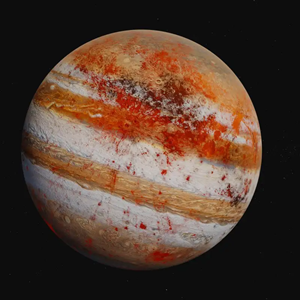 The Callinon system is a strategically vital stellar neighborhood located deep within the Gamma Quadrant, firmly established under the territorial jurisdiction of the Dominion. Anchored by a luminous M-class star, the system functions primarily as a centralized hub for Dominion communications and logistical oversight rather than as a center for population or commercial development. While the broader system remains largely uninhabited by sentient species, it maintains a critical infrastructure presence necessitated by its proximity to key sectors, such as the Karemma system. The system serves as a silent, heavily guarded sentinel, with its orbital paths optimized for the rapid deployment of Jem’Hadar patrol vessels that ensure the absolute security of the surrounding Dominion space.
The centerpiece of the system is the seventh planet, Callinon VII, a massive gas giant that dominates the local orbital landscape. Despite its classification as a gas giant, the planet serves as a discreet anchorage for a crucial unmanned subspace relay station. This facility is the designated communication nexus for the Karemma, who are under strict orders to route all inquiries and diplomatic transmissions intended for the Dominion through this specific site. Because the station operates autonomously, the surface environment remains entirely devoid of permanent inhabitants. The station itself is a triumph of utilitarian design, characterized by dark, cavernous interiors illuminated only by the flicker of sophisticated, high-density data graphics that monitor the pulse of the Dominion’s sprawling communication network.
The system’s strategic importance was underscored in 2371, when the USS Defiant entered the system during a search for the Founders. The presence of the relay station triggered an immediate, overwhelming response from Dominion defensive forces, forcing Federation vessels to retreat to avoid escalation. While the station’s interiors are noted for their stark, high-tech aesthetic, the atmosphere of the planet is far more rugged, featuring mountainous regions and dense forest-like atmospheric formations that, to the casual observer, share a startling, superficial resemblance to the temperate landscapes of Earth. Today, the Callinon system remains a stark, functional monument to Dominion efficiency. It operates as a high-security, automated gateway in the Gamma Quadrant, ensuring that while the planets themselves may be vast and uninhabited, the information flowing through them remains under the absolute control of the Dominion.
Indurane System
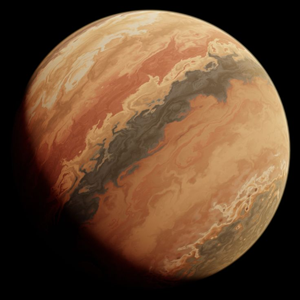 Indurane, formerly cataloged as Sisko-Dax 1171, is a singular and enigmatic entity located within a complex quadinary star system in the Callinon Sector of the Gamma Quadrant. Initially misclassified as a brown dwarf star during early surveys conducted by Commander Benjamin Sisko and Lieutenant Jadzia Dax, the object possesses an immense orbital period of twelve thousand years. Further investigation by the crew of the USS Enterprise-H revealed that Indurane is not a stellar body at all, but rather a colossal, sentient life-form comparable in scale to a Class T gas giant. Perhaps most remarkably, detailed chemical analysis indicates that this entity shares a molecular composition strikingly similar to the Changelings, leading to the theory that it may be the progenitor or the very first Founder of the Dominion.
The discovery of Indurane’s true nature occurred under harrowing circumstances in 2439. Following the detection of massive Dominion mobilization near Deep Space 47, an Enterprise-H investigative team tracked a downed Dominion scout vessel to a crystalline structure suspended within Indurane’s atmosphere. During the rescue effort, the joint crews were beset by large, hostile creatures inhabiting the entity's upper layers. The mission eventually expanded into a desperate search for the origins of the Changelings, during which time the crew succeeded in rescuing Odo, an event vital to preventing a catastrophic collapse of the Dominion's internal hierarchy. Following these events, Odo named the entity "Indurane," a Bajoran term meaning "ancient," acknowledging its status as a foundational, albeit potentially hostile, force in the galaxy.
In the wake of these revelations, the system has been placed under a permanent quarantine by the United Federation of Planets to monitor the remaining threats posed by such immense biological power. The geopolitical repercussions have been equally significant; the necessity of maintaining stability in the sector forced the Enterprise-H to accept a Vorta liaison officer, Administrator Kuzos, as a permanent member of its senior staff. This tenuous partnership, established as part of the broader Project Longshot initiative, underscores the dangerous reality of Indurane. Balanced on the edge of a precarious peace, the system stands as a reminder that the most profound mysteries of the Dominion remain guarded by an ancient, watchful sentinel that defies conventional scientific classification.
CLASSIFIED
Empersa System
 The Empersa system stands as the sovereign heart of the Dominion, located at highly classified coordinates deep within the Gamma Quadrant. This secluded stellar neighborhood is anchored by a stable G-type yellow star, which provides a consistent, temperate light for its singular planetary body. Despite its role as the administrative and spiritual capital of the Dominion, the system is intentionally obscured from the broader galactic map. Its location, situated well beyond the Gavara sector, was chosen for its extreme remoteness, ensuring that the Founders could reside in absolute security following their migration from the Omarion Nebula in 2372. The Dominion maintains a near-total blackout regarding the system’s navigational data, utilizing sophisticated electronic countermeasures and Jem’Hadar escort protocols to prevent any unauthorized vessel from recording the path to this vital center of power.
The planet Empersa itself is a world of unique geological and biological character, designed to serve as the ultimate sanctuary for the Great Link. Much of the planet's surface is dominated by a vast, liquid expanse that functions as the natural habitat for the Changelings in their collective state. Small, scattered landmasses and tranquil islands dot this fluid landscape, providing secluded spaces for the Founders to deliberate and maintain the administrative machinery of their sprawling empire. The environment bears a striking resemblance to their ancestral homeworld, offering a harmonious blend of liquid depths and terrestrial outcroppings that reflect the fluid nature of the Founders themselves. It is here that the most critical decisions affecting the Gamma Quadrant are made, far from the influence of the solids and the political volatility of the Alpha Quadrant.
Beyond its role as the seat of the Great Link, Empersa has served as the final nexus of several pivotal events in galactic history, including the resolution of the morphogenic virus crisis and the defense against the devastating Hur’q Swarm. In the aftermath of the Hur’q conflict, the system’s status underwent a profound transformation, moving from an isolated bastion of absolute Dominion authority to a central pillar of the newly expanded Khitomer Alliance. Despite these geopolitical shifts, Empersa remains a place of profound solitude and profound significance. It stands not as a world of commerce or industry, but as a silent, heavily protected monument to the enduring legacy of the Founders, existing as a perfectly preserved enclave that remains the true point of origin for the Dominion’s absolute control over the Gamma Quadrant.
Coladri Sector
Coladri System
The Coladri system is a remote and strategically positioned stellar cluster located deep within the Gamma Quadrant, existing under the firm administration of the Dominion. Situated within the broader Coladri sector, the system serves as a quiet, disciplined outpost on the rimward edge of Dominion territory, marking a significant transition point where their sphere of influence meets the largely uncharted reaches of the surrounding expanse. Although the system is entirely uninhabited by sentient populations and devoid of any major colonial infrastructure, it remains a critical link in the Dominion’s regional monitoring network. Automated sensor arrays and long-range tactical surveillance beacons are scattered throughout the system, ensuring that the Dominion maintains constant awareness of activity in this sensitive sector, particularly near its shared borders with the Kurill and Callinon regions.The orbital dynamics of the Coladri system are defined by a series of barren, terrestrial worlds and rocky debris fields that offer little in the way of resource extraction or agricultural potential. The primary star, a stable yet unremarkable spectral type, provides a consistent gravitational anchor for these inert planetary bodies, none of which possess the atmospheric conditions necessary to support complex biological life. The surface of the largest planet in the system is characterized by vast, windswept plains of silicate dust and deep, volcanic craters that have remained undisturbed for eons. Without the presence of any indigenous species or logistical support hubs, these worlds exist as frozen, silent monuments to the stark environmental reality of the outer Gamma Quadrant, largely ignored by the merchant convoys and fleet movements that characterize the core Dominion domains.
For the Dominion, the value of the Coladri system lies strictly in its geopolitical placement. It serves as a discreet, high-security waypoint for internal communication and early-warning detection, functioning as a defensive buffer that allows the Jem’Hadar to monitor for potential incursions without the need for a permanent or costly presence. During times of conflict, such as the Hur'q invasion of the 25th century, the system’s location made it a vital point of interest, illustrating how even the most desolate, uninhabited reaches of the quadrant are meticulously integrated into the Dominion's grand design. Today, the system persists as an empty, functional void, standing as a quiet testament to the efficiency of a galactic power that views even the most barren stars as essential components of its absolute authority.
Didarea Sector
Didarea System
The Didarea system is a compact, fascinating star system situated within the Gamma Quadrant, existing as a rare, independent pocket of space that remains entirely outside the direct administrative or military control of the Dominion. Anchored by a stable, primary star that provides consistent illumination across its orbital path, the Didarea system is composed of several diverse planetary bodies, each displaying distinct geological and atmospheric characteristics. Unlike the highly integrated systems typically found within Dominion-held sectors, Didarea operates with a unique level of autonomy, characterized by a lack of the pervasive military infrastructure or surveillance grids that define much of the surrounding Gamma Quadrant territory.The primary world in the Didarea system is a robust Class M planet that exhibits a surface dominated by vast, temperate oceans interspersed with jagged, crystalline mountain ranges. This planet’s atmosphere is rich and highly oxygenated, supporting an incredibly dense, non-sentient ecosystem that has remained undisturbed for millions of years. Deep beneath the surface of these oceans lie extensive, bioluminescent coral structures that cast a soft, rhythmic glow through the water, suggesting a unique planetary mineral composition that fuels widespread aquatic photosynthesis. Beyond this primary world, the system features two smaller, rocky planets characterized by extreme temperature fluctuations and high metallic content. These worlds are marked by vast, barren plains of iron-rich dust, where the absence of significant atmospheric protection has resulted in a landscape of dramatic, sun-scorched craters and deep, narrow chasms.
The outer reaches of the Didarea system are defined by a singular, massive gas giant that serves as a gravitational anchor for a complex, shimmering ring system. This ring is composed primarily of volatile ice fragments and trace amounts of ionized gas, creating a visible, swirling halo that reflects the light of the system’s primary star with a spectrum-shifting brilliance. The sheer size of this gas giant creates tidal forces that influence the orbital stability of the inner, rocky planets, while simultaneously protecting the inner system from the influx of rogue interstellar debris. Despite its proximity to Dominion space, the system’s isolation has been preserved through its relative obscurity and lack of highly sought-after strategic resources. As a result, the Didarea system remains a pristine, independent celestial laboratory, offering a quiet glimpse into the natural, unmanaged evolution of planetary systems within the Gamma Quadrant.
Iocarro System
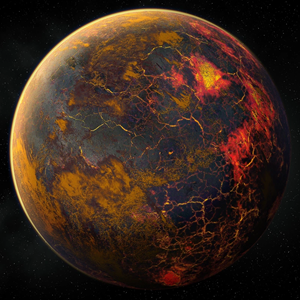 Iocarro is a Class M planet located within the Gamma Quadrant, historically serving as the homeworld for the native Iocarran civilization. The planet’s visible surface is characterized by a violent and hazardous landscape, defined by rugged, mountainous terrain, massive fractures, and widespread volcanic anomalies. This extreme environment produces significant atmospheric turbulence and volatile weather patterns, rendering the surface hostile and lethal for sustained exposure. Thick clouds of smoky ash and hot, dense gases blanket the upper crust, creating a stark visual contrast with the planet's internal ecosystems.
Beneath this formidable exterior lies a highly stable foundation honeycombed with vast, interconnected networks of deep canyons, winding valleys, and sprawling subterranean caverns. Unlike the volatile conditions above, these sheltered lower levels feature a temperate, protected climate insulated from destructive solar radiation and toxic surface storms. Liquid water reservoirs and native flora flourish within these isolated microclimates, establishing a serene, hospitable underworld. This unique physical dichotomy historically allowed the native Iocarrans to evolve and establish a flourishing civilization entirely underground, shielding their society from the severe planetary changes occurring over millions of years.
By the late 24th century, ancient Dominion records mistakenly indicated that the Iocarrans had completely died out due to the planet’s surface volcanic activity, leaving the world viewed by many interstellar powers as a dead graveyard. However, because the species relied entirely on their advanced subterranean infrastructure rather than the surface, they remained largely isolated and protected from external observation. In addition to its unique evolutionary ecosystem, modern Starfleet scans have identified highly unusual energy readings originating from the deepest cavern layers. These anomalies point to vast, untapped deposits of natural Benamite crystals. Because Benamite is impossible to synthesize artificially, the system has become an invaluable strategic site for securing the essential fuel required to power Quantum Slipstream Drives. Despite its relative seclusion, Iocarro serves as both an enigmatic anchor for local trade routes and a critical scientific frontier.
Ennis Sector
Chelu System
 Chelu II is a Class M world located in the Ennis Sector, serving as a poignant reminder of the fragility of civilization in the face of cosmic conflict. Once a sprawling utopian society where eight billion people were deeply immersed in high culture, advanced education, and ecological principles, the planet’s history was irrevocably shattered during an ancient flashpoint of the Q Civil War. This devastating conflict resulted in the total destruction of the population and the widespread ruin of the planetary surface. While the world has seen efforts at resettlement in the modern era, vast swaths of the planet remain in desolate ruin, standing as a silent testament to the catastrophic power of the Q.
The planet’s unique status is underscored by the presence of a lone Q entity, who has chosen to remain as the planet’s self-appointed guardian for eternity. This entity’s role became a focal point of Starfleet attention in 2439, when the Starship Enterprise responded to a distress signal emanating from the world. During this encounter, Commodore Wilkan Targaryen and his crew were subjected to a series of elaborate, omnipotent trials designed to test their fitness as protectors of the Cheluans. These tests were not merely superficial; they forced the senior staff to inhabit legendary roles at critical historical turning points, ranging from the Romulan threat aboard the Columbia to the final, tragic moments of the USS Odyssey.
The ultimate purpose of these cosmic tests was to determine if Starfleet had evolved beyond the reliance on brute force toward the pursuit of measured, peaceful diplomacy. In a simulation of the Battle of the Foundry, Commodore Targaryen rejected past tactical mistakes in favor of negotiation, proving that Starfleet’s true strength lies in its capacity for evolution. Although the Enterprise crew was ultimately deemed fit to serve as protectors, they refused the Q’s offer to take over guardianship of the world. Consequently, the Q remains the begrudging steward of the planet, having issued a stern demand that Starfleet never return. Despite the ongoing efforts of the Cheluan High Council to restore their society, Chelu II exists in a delicate state, perpetually guarded by an unpredictable cosmic entity while Starfleet maintains a cautious distance, respecting the uneasy peace established amidst the remnants of a shattered utopia.
Drai System
 Drai V, the fifth planet in the Drai system, serves as one of the most critical and heavily militarized installations within the Dominion’s Gamma Quadrant infrastructure. Formerly a Class M world, the planet has transitioned into a barren, rocky environment — now bordering on Class H — due to centuries of unchecked industrial exploitation and intensive warfare. The surface is defined by a void-black sky and a volatile landscape characterized by lethal volcanic biomes, where rivers of molten lava flow across desolate plains and areas of high-level radioactivity are common. While limited terraforming efforts have successfully established small, humid jungle-like regions near the equator, the world remains overwhelmingly inhospitable, serving primarily as a utilitarian hub for the Dominion’s ongoing war machine.
This planet is the heart of the Dominion’s cloning and breeding operations. It was here that the first Jem’Hadar were engineered, their genetic profiles derived from the hunted Tosk species to create soldiers defined by unyielding fury. Today, hundreds of massive cloning centers dot the surface, continuously churning out soldiers and specialized personnel. The planet also supports a major orbital shipyard, which produces attack fighters utilized by hatchlings during brutal, live-fire battle drills. These displays of tactical savagery are frequently used by Vorta administrators to intimidate foreign ambassadors, demonstrating the Dominion's readiness to expend vast fleets simply to prove their martial dominance. The atmosphere of constant conflict is so pervasive that the planet’s surface is perpetually scarred by the simulated training engagements of the Drai, Jem’Hadar, and Tosk populations.
Despite the industrial focus, the world maintains one concession to the war effort: the Hall of Honor. This facility houses the Honored Elders, a rare class of Jem’Hadar who have survived twenty years of active duty. These veterans spend their remaining years training future generations in the art of war before they expire. In 2439, the strategic importance of this system was highlighted when the Starship Enterprise was ordered to return a renegade Tosk to the Drai system. The mission underscored the grim reality of Drai society, where sentient beings are treated as biological assets for sport. Following the Tosk's escape and subsequent crash-landing on the surface, the Dominion enforced a strict quarantine, threatening the Federation with the total dissolution of their Treaty if they continued to interfere in the affairs of this vital, devastated world.
Tevlin-De System
 Tevlin-De is a celestial body located within the Gamma Quadrant that served as the ancestral homeworld for an advanced, technically sophisticated civilization. Geologically, the planet was a significant center of development characterized by its ability to sustain high levels of societal advancement throughout the 22nd century. Although the planet’s precise physical geography is rarely detailed, it functioned as the primary seat of power for an advanced race capable of developing interstellar-capable technology and complex planetary containment systems. Historically, the world’s environment was stable enough to facilitate a global society that exerted absolute authority over its various sub-factions, eventually utilizing its significant technological resources to enforce peace through extreme measures.
The planetary history of Tevlin-De is most notable for the decisive intervention taken by its governing leadership during a period of intense internecine warfare. Faced with a protracted and violent conflict between two prominent groups (the Ennis and the Nol-Ennis), the planet's ruling council chose to resolve the instability not by internal mediation, but by total territorial removal. Rather than allow the conflict to spill over and ruin the planet's own infrastructure or population centers, the leaders orchestrated the permanent exile of both factions. This forced relocation shifted the site of their perpetual warfare from the surface of Tevlin-De to a designated prison moon within the nearby Olt system.
The technology utilized by the inhabitants of Tevlin-De represents a pinnacle of their scientific evolution. By deploying an advanced satellite network that could project nanite-based regenerative fields onto an off-world satellite, the architects of this system successfully outsourced their justice system. This technological capability effectively scrubbed the surface of Tevlin-De of the warring elements, allowing the homeworld to remain a pristine, albeit highly controlled, domain. While the planet itself remains an example of a civilization with the capacity to reshape its own socio-political landscape through orbital engineering, its legacy is forever tethered to the tragic isolation of those exiled factions. Today, Tevlin-De exists as a quiet, enigmatic relic in the Gamma Quadrant, standing as a testament to the cold, clinical efficiency of an advanced race that prioritized the safety of its core world over the welfare of its dissident populations.
Gaia Sector
Gaia System
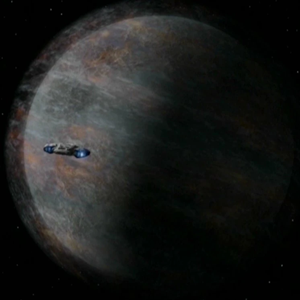 Gaia IV, known colloquially as Gaia, is a Class M, Earth-like planet situated within the Gaia binary star system in the Gamma Quadrant. Featuring diverse climatic conditions that span from frozen tundra to arid deserts across its major landmasses, the planet appears topographically conventional. However, the world is uniquely encased in a volatile quantum energy barrier that induces severe temporal displacement, rendering navigation exceptionally hazardous. Due to the dangers posed by these localized temporal anomalies, the United Federation of Planets maintains the system under strict quarantine.
The planet is most notable for the "Children of Time" temporal incident involving the USS Defiant. In an alternate timeline discovered in 2373, the vessel encountered the barrier and was propelled back to the 22nd century, where it crashed. Over two centuries, the stranded crew and their descendants established a multi-species colony of 8,000 individuals on a southern peninsula, preserving various cultural traditions including those of the Klingons. This timeline was eventually erased when a future version of Constable Odo intervened to modify the Defiant's original flight plan.
In 2439, the USS Enterprise conducted a survey of the system alongside representatives from the Federation Department of Temporal Investigations. During this mission, the crew encountered a quantum duplicate of the USS Defiant, resulting in a brief resurgence of the temporal anomaly. To resolve the anomaly, the crew of the Enterprise executed a complex 'cradle' maneuver to extract the duplicate Defiant from the barrier. Once completed, to ensure continued stability of the sector, Commodore Targaryen ordered the deployment of warning buoys to mask the barrier from future interference.
While the events surrounding Gaia IV remain heavily classified at Starfleet Level X, the planet serves as a significant case study in temporal mechanics, highlighting the fragile causality of the galactic timestream and the ongoing challenges faced by the Federation in maintaining historical integrity.
Further details are classified to Starfleet Level X.
Kylata System
The Kylata system is a complex trinary star system located in the Gamma Quadrant, serving as a notable point of interest for deep-space research missions. Comprising a pair of luminous A-class stars and a smaller K-class companion, the system features a dynamic and multi-layered gravitational environment that has long intrigued stellar cartographers. Unlike many of its neighbors in the Gamma Quadrant, the Kylata system remains an independent territory, existing entirely outside the political and military sphere of the Dominion. Because of its unique stellar composition and relative isolation, the system was prioritized as a key destination during the extensive Gamma Quadrant Bio-Survey conducted between 2369 and 2375, providing researchers with invaluable data on star formation and planetary development in this remote sector of the galaxy.The system’s orbital architecture is anchored by Kylata II, a Class M planet that represents the primary focus of scientific interest in the region. As the second planet in the system, Kylata II possesses a stable, habitable environment that has been the subject of remote sensory analysis, most notably by the crew of the USS Defiant in 2371. While detailed surface exploration was not possible during initial visits, long-range scans confirmed that the planet retains the atmospheric and geophysical characteristics necessary to support complex life. The surface of Kylata II is thought to be home to diverse, temperate biomes, though its specific ecological composition remains largely a mystery to Federation scientists, who have focused primarily on the system’s broader stellar stability rather than localized planetary habitation.
Beyond Kylata II, the system includes at least one other significant planetary body that orbits the complex gravitational nexus of the three stars. The interplay between the radiation output of the A-class stars and the more stable influence of the K-class dwarf creates a highly variable environment for the system's outer worlds, which are subject to shifting thermal patterns and unique tidal forces. This combination of stellar dynamics and habitable planetary space makes Kylata a prime candidate for future long-term study. By maintaining its autonomy and avoiding the encroachment of Dominion influence, the Kylata system stands as a rare, untainted laboratory for understanding the natural evolution of life-sustaining worlds in the Gamma Quadrant. As data from the Bio-Survey continues to be processed, Kylata remains a vital, albeit enigmatic, waypoint for those navigating the uncharted corridors of the quadrant.
Gavara Sector
Gavara System
The Gavara system is a remote but promising star system situated within the Gamma Quadrant, currently under the administrative jurisdiction of the Dominion. Anchored by a stable G-class primary star, the system represents one of the few regions in this sector that offers significant potential for future expansion. While the system is currently uninhabited, it has been a subject of intense scientific interest, most notably serving as a primary target for the Gamma Quadrant Bio-Survey conducted between 2369 and 2375. This survey evaluated the system's planetary composition and atmospheric stability, ultimately determining that its worlds possess the necessary conditions to support complex life and large-scale habitation, marking Gavara as a prime candidate for future terraforming and colonization efforts.The system features several planetary bodies in the habitable zone, which provide a temperate environment and stable geological structures. While the Dominion has not yet committed to establishing a permanent presence or a full-scale colony, the system is frequently included in long-range logistical planning and administrative documentation. Its strategic value is underscored by its occasional appearance in regional flight plans and reconnaissance records, suggesting that while it remains a quiet frontier today, it is being preserved for potential utility in the Dominion's broader development strategy. The lack of current habitation allows these planets to remain in a pristine, natural state, preserving their ecosystems for the day when the Dominion deems it necessary to integrate them into their established network of worlds.
The system’s history remains relatively sparse, defined mostly by its status as a destination for scientific inquiry rather than a theater of conflict or trade. In 2372, the system was the intended target of a biological survey expedition involving key Starfleet personnel, a mission that was only redirected due to the urgent necessity of responding to a crisis in the nearby Teplan system. Since that time, the Gavara system has continued to exist as a largely undisturbed, quiet corner of the Gamma Quadrant. As a colonizable frontier within Dominion space, Gavara stands as a silent reserve of undeveloped potential, waiting for the administrative resources and strategic initiative required to transform its currently vacant planets into productive, inhabited members of the Dominion’s ever-expanding reach.
Idran Sector
Dosi System
 Dosa II, frequently referred to as Dosi, is a Class M planet located within the Gamma Quadrant and serves as the planetary foundation for the Dosi civilization. Orbiting an M-class star within the Dosi binary system, the planet features a temperate environment capable of supporting a substantial population, which was estimated at 1.5 billion inhabitants by the late 24th century. The world’s surface is characterized by geographic conditions standard for Class M worlds, facilitating the development of major urban centers, most notably the capital city of Relxer-D. As a key destination on the Gamma Quadrant Bio-Survey conducted between 2369 and 2375, Dosa II has been documented as a stable, inhabited world with a planetary infrastructure well-integrated into the broader regional trade network.
The climate and ecology of Dosa II are relatively hospitable, which allowed for the expansion of the Dosi Confederation across its surface and into the surrounding star system. The planet’s position in the Dosi system places it at a vital crossroads in the Gamma Quadrant, serving as a hub for both terrestrial industry and interstellar commerce. While the surface features are primarily defined by the needs of its inhabitants and the requirements of large-scale trade, the planet has remained an important point of interest for both the Dominion and independent explorers. Its location provides an essential navigational and logistical anchor, benefiting from a stable orbital period and a celestial environment that has enabled the Dosi to maintain a consistent presence in the sector for over a thousand years.
In recent decades, Dosa II has taken on additional strategic significance due to the evolving political landscape of the Gamma Quadrant. As the Dosi Confederation deepened its ties with the Dominion, the planet’s role as a logistical node increased, occasionally bringing it into the sphere of broader galactic conflicts. In 2410, for instance, the planet became a focal point for security operations when a joint task force led by Ambassador Odo and the USS Defiant arrived to investigate threats posed by Hur'q activity. Despite these external pressures, the planet itself remains the enduring heart of the Dosi system, functioning as a silent, reliable sentinel that sustains its civilization and continues to serve as an anchor for trade and transit throughout the quadrant.
Idran System
The Idran system is a complex trinary star system located in the Gamma Quadrant, famously positioned in close proximity to the Gamma Quadrant terminus of the Bajoran wormhole. The system features a massive F-class supergiant as its primary star, accompanied by two O-class stellar companions, one of which has been identified as a dwarf star. Despite the scale of its stellar components, the system is notable for the absence of standard habitable planets, instead hosting a diverse array of bodies, including two dark-blue gas giants and a significant asteroid field. Its position — approximately 4.7 light-years from the wormhole terminus — made it the first system cataloged by Federation explorers upon their initial transit into the Gamma Quadrant in 2369, serving as a primary navigational reference point for all subsequent deep-space missions.The internal geography of the system is remarkably dynamic, particularly within its dense asteroid fields. These fields are composed of the debris from a destroyed planetoid, forming a complex maze of hollowed-out asteroids that harbor unique biological life. The region is home to swarms of Idran cosmozoans, which are organized around massive organisms known as Idran Haulers. These entities utilize the system's debris as both a habitat and a food source, consuming the residual materials of the planetoid remnants.
The historical significance of Idran is anchored to a moon orbiting one of the system’s two gas giants. Fifty millennia ago, this moon was a thriving Class M world and the home of the Eav'oq, a civilization that held a deep, religious reverence for the wormhole’s inhabitants. Over the intervening millennia, environmental degradation and the shifting orbital mechanics of the trinary system reduced the moon to a marginal Class K world. To escape the predations of the genocidal Ascendants, the Eav'oq eventually retreated into subspace, leaving the system largely uninhabited for fifty thousand years. During this time, stellar drift relocated the Idran system several light-years from its original position near the wormhole. In the modern era, the system has served as a backdrop for tactical operations and exploratory survey missions, confirming its status as a vital, albeit enigmatic, waypoint at the gateway between the two quadrants of the galaxy.
Karemma System
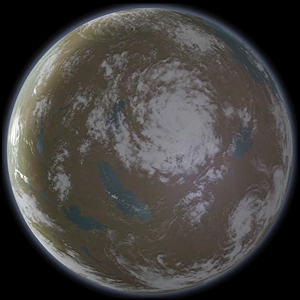 Karemma is a Class M world situated in the Idran sector of the Gamma Quadrant, orbiting a binary star system that provides the planet with stable, though complex, illumination cycles. As the capital of the Karemma Foundation, the planet is extensively developed, with its urban landscape dominated by the capital city of Kecemen. This city serves as the nerve center for the Foundation’s expansive corporatocracy, housing the massive trade ministries and educational centers that sustain Karemman society. Geographically, the world is characterized by efficient land use, reflecting a civilization that has mastered the balance between industrial productivity and the maintenance of a highly regulated, orderly environment. The planetary infrastructure, including advanced transit systems and planetary-scale trade hubs, is designed to support the constant flow of goods required to regulate commerce across the Dominion’s territories.
The Karemman civilization itself is shaped by a cultural philosophy centered on honesty, integrity, and meticulous appraisal. Physically tall with bird-like features, the Karemman people possess a unique evolutionary talent for evaluating the intrinsic worth of any material object within moments of inspection. This skill, fostered from early childhood, is a cornerstone of their society, enabling them to serve as the unofficial merchant caste of the Dominion. Unlike other mercantile species that thrive on deception or loopholes, the Karemman value openness in their dealings. This reputation has granted them a rare degree of autonomy and trust from the Founders, who rely on the Karemman to manage the complex economic machinery of the Gamma Quadrant, effectively allowing the Foundation to maintain a stable, albeit demanding, role as the Dominion's financial stewards.
Despite their dedication to the Dominion, the Karemman are deeply invested in their own internal development, emphasizing rigorous education and a rigid clan-based corporate structure. Their pursuit of honesty is so ingrained that they have been known to honor contracts even when doing so results in a disadvantage, provided that the contract itself was formulated through fair and open negotiation. This cultural dedication has allowed them to survive as a sovereign entity for centuries, even as they navigated the pressures of being a Dominion member state. Following the liberation of their homeworld from the Hur'q during the late 2410s, the Karemman began exploring new paths toward democratic reform, reflecting a resilient society that continues to balance its long-standing commitment to economic stability with an emerging desire for political independence and self-determination in a post-Dominion galaxy.
Parada System
The Parada system is a prominent binary star system located in the Gamma Quadrant, consisting of a B-class star and an F-class star. Situated within reach of the Bajoran wormhole (a journey that requires approximately one hour and fourteen minutes at maximum warp for a Starfleet runabout) the system functions as a critical navigational waypoint in the region. The system is structurally diverse, containing at least four distinct planets, each contributing to the orbital complexity of this binary environment. Among its most notable celestial bodies are Parada II, an inhabited world that has served as a center for political activity, and Parada IV, the largest planet in the system. The systemic arrangement is further defined by a high concentration of satellite bodies; Parada IV alone is orbited by seven moons, which significantly influence the tidal dynamics and orbital stability of the inner system.Parada II is classified as a habitable planet and has been a focal point for the system’s recent history, particularly regarding regional conflicts and diplomatic tensions. While Parada II is the primary site of inhabited activity, the system is not without other turbulent developments; another planet in the system has spent much of the 2370s recovering from the destabilizing effects of a prolonged civil war. This pattern of internal volatility seems reflected across the system’s wider footprint, where planetary environments range from habitable, settled worlds to more desolate areas affected by socio-political decay. The system's binary stars create a unique illumination cycle for these planets, influencing both the surface climates and the visibility of the celestial objects within the system's gravitational influence.
The system serves as a tactical location as well, with the massive presence of Parada IV providing sufficient gravitational masking to hide small vessels from sensor arrays. This strategic value has made the system a recurring theater for pursuit and clandestine activity. Beyond its utility for transit and tactical maneuvers, the Parada system remains a microcosm of the Gamma Quadrant's varying states of development — hosting worlds at widely different levels of stability, from the populous, inhabited regions of Parada II to the rebuilding efforts occurring on its unnamed neighbor. As an important gateway positioned near the wormhole, the Parada system continues to be a vital, if occasionally volatile, corridor for those traveling into the deeper reaches of the Gamma Quadrant.
Saltah'na System
The Saltah’na system is an enigmatic and ancient stellar neighborhood located in the depths of the Gamma Quadrant, currently encompassed within the territorial borders of the Dominion. Defined by a complex binary star configuration, the system once served as the heart of the Saltah’na civilization, a highly advanced species that ultimately engineered its own extinction through a catastrophic internal power struggle. Because the Saltah’na vanished millennia ago, the system is now largely uninhabited, serving as a silent, desolate graveyard of a once-great culture. While the Dominion maintains jurisdictional oversight over the region as part of its expansive Gamma Quadrant hegemony, the system remains devoid of permanent population, industrial outposts, or active logistical facilities, preserved in a state of stagnant neglect.The planetary architecture of the Saltah’na system is anchored by the complex gravitational interplay of its twin suns, which influences the orbits of several rocky, terrestrial worlds. Among these, the fifth planet — often simply referred to as Saltah’na — is the most significant, noted for its historical role as the nexus of Saltah’na society. The surface of this world remains scattered with the decaying remnants of ancient architectural wonders, including the unique horological devices known as Saltah’na clocks, which were sophisticated instruments used by the native population to track temporal passage. Although the physical civilization is long gone, the system still occasionally exerts a lingering influence; ancient energy spheres containing the residual psychic patterns and historical records of the Saltah’na have been known to drift through the region, capable of impacting the minds of outsiders who inadvertently interact with them.
For the Dominion, the Saltah’na system represents a low-priority territory that requires minimal administrative resources. There are no ongoing colonization projects or active mining operations, as the Dominion seemingly finds little strategic value in a system whose primary legacy is one of self-destruction and ruin. The system is occasionally monitored by automated sensors to ensure that no debris from the ancient civilization is salvaged by unauthorized scavengers, but otherwise, it is left entirely to itself. Today, the Saltah’na system persists as a lonely monument to a vanished people, a place where the orbits of long-dead planets continue to circle a binary pair of stars in a cold, indifferent dance, safely tucked away within the iron-fisted order of the Dominion.
Wadi System
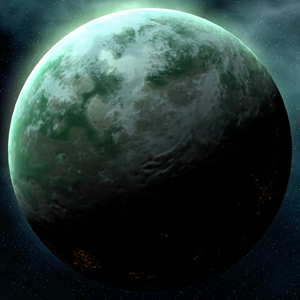 Oason, also known as Tomerela IV, is a lush, paradisal Class M planet located in the Tomerela star system of the Gamma Quadrant. Orbiting its primary star as the fourth planet in the system, Oason is defined by a diverse array of warm, humid biomes that have remained relatively undisturbed for millennia. As the long-standing cradle of the Wadi civilization — a society that has flourished for over 18,000 years — the planet serves as a unique sanctuary in the Gamma Quadrant. Despite its location within a region often dominated by the influence of the Dominion, Oason remains fiercely independent, utilizing highly advanced defensive technologies that effectively discourage unwanted military incursions.
The surface of Oason is characterized by its dual nature as both a natural paradise and an enigmatic gaming hub. While much of the planet features verdant, tropical environments, the areas open to off-world visitors are almost exclusively dedicated to gaming houses, casinos, and hyper-realistic simulation centers. These facilities utilize technology far beyond the comprehension of most Alpha and Gamma Quadrant species, including apparatuses capable of creating interdimensional spaces where participants can engage in games ranging from classic dice and cards to complex, multi-dimensional virtual experiences. The physical infrastructure of these gaming zones is maintained by the Oason Commission, a governing body that oversees the planet’s integration with the few outside travelers who are permitted to visit.
The planet’s defensive capabilities are perhaps its most sophisticated feature. Oason is protected by an automated system that monitors approaching vessels; armed warships attempting to breach the planet’s immediate vicinity are instantly transported to the edge of the system near the Oort cloud. This technological mastery, which includes the ability to fold physical space within interior hallways and dissipate incoming energy weapons fire, has allowed the planet to persist as a sovereign entity outside of Dominion control. Because the Wadi have transcended the physical requirements of biological life — such as the need for food, sleep, or air — the planet’s environment is not structured around industrial output, but rather around the aesthetic and recreational pursuits of its inhabitants. Consequently, Oason remains a quiet, cryptic anomaly in the Gamma Quadrant, serving as a private laboratory for a civilization that views the entire galaxy as a stage for infinitely diverse and complex games.
Categories: No categories found