Deep Space Nine
Created by Commodore Wilkan Targaryen on Wed Jan 3rd, 2024 @ 11:01pm
Deep Space Nine
 | |
| Affiliation: | Federation Starfleet Republic of Bajor Cardassian Union (Former) |
| Class: | Nor |
| Service Period: | 24th - 25th Centuries |
| Diameter: | 1,451 meters |
| Height: | 969 meters |
| Decks: | 260 |
| Mass: | 45,000,000 metric tons |
| Crew: | 2,000 personnel 7,000 evacuation |
| Armament: | Phaser Banks Phaser Turrets Torpedo Launchers |
| Auxiliary craft: | Garrison Ship Starfleet Runabouts Starfleet Shuttlecraft |
Overview
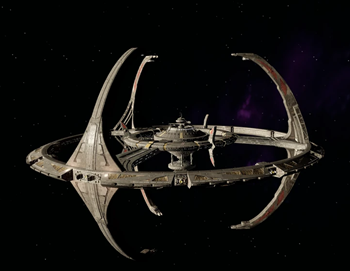
Deep Space Nine (sometimes referred to as DS9, Gateway Station, or its Cardassian name Terok Nor) is a Nor Series Starbase located adjacent to the Alpha Quadrant terminus of the Bajoran Wormhole that serves as an inspection point for travelers to and from the Gamma Quadrant. Constructed by the Cardassian Union during their Occupation of Bajor, DS9 was captured by the Republic of Bajor and administrated by the United Federation of Planets. Operational for almost a century, the station is constantly updated to meet the needs of defending the Bajoran Wormhole.
History
Occupation of Bajor
The history of Deep Space 9 begins with the construction of Terok Nor, a Cardassian refinery and command post that became an enduring symbol of the Occupation of Bajor. Developed between 2346 and 2351 to serve as the primary uridium ore-processing hub in the sector, the station was commissioned during the expansionist era of the Cardassian Union. Its triradial design (characterized by a Central Core, a Habitat Ring, and a massive outer Docking Ring) was engineered under the direction of Cardassian leader Kotan Darek, utilizing a "planar-columnar" aesthetic intended to project strength and architectural dominance.The station was built using the forced labor of the Bajoran people, specifically overseen by the captive architect Charna Sar, who was compelled to integrate functional Cardassian engineering into the refinery’s layout. Designed to process roughly 20,000 tons of ore daily, the station was a site of immense suffering. Bajoran laborers worked in the ore-processing pylons under extreme conditions, with temperatures often reaching 55° Celsius. Despite being designed for a comfortable occupancy of 7,000, the station frequently held thousands more in cramped, industrial quarters, including those processed through the station's brutal periods of internal crackdowns.
Terok Nor served as the seat of the Cardassian Prefect of Bajor, most notably Gul Skrain Dukat. From the station's Operations Center, located at the apex of the Central Core, Dukat administered the military subjugation of the planet below. While Dukat viewed the station as a hallmark of Cardassian administrative efficiency, it was a high-priority target for the Bajoran Resistance. The station’s importance to the uridium supply chain made it the frequent target of sabotage; Dukat himself survived no fewer than five assassination attempts on the station, including efforts by the Shakaar and Hathor resistance cells.
By the late 2360s, the cost of the Occupation and the persistence of the Bajoran insurgency forced the Cardassian Central Command to withdraw. In early 2369, the Cardassian Union abruptly abandoned Bajor. As the retreating forces evacuated, they engaged in a final campaign of "scorched earth" destruction. Soldiers devastated the station, stripping every valuable computer relay and destroying vital life-support equipment. In his final moments on the station, Gul Dukat engaged the automated self-destruct system, intended to vaporize the facility and any Bajorans left aboard; however, the system was mysteriously deactivated — likely due to a last-minute fail-safe or intervention — leaving the gutted, powerless shell of Terok Nor adrift in high orbit over Bajor. This shell would soon be claimed by the Bajoran Militia and renamed Deep Space 9 upon the arrival of Starfleet.
Republic of Bajor
Following the Cardassian withdrawal in 2369, the Bajoran Provisional Government deployed the Bajoran Militia to assume control of the derelict refinery. Recognizing their inability to defend the system or the planet alone, Bajor requested the assistance of the United Federation of Planets in administrating the station. Under the terms of this joint administration, Deep Space 9 remained the sovereign property of the Republic of Bajor, making the station and its occupants subject to Bajoran law while Starfleet oversaw day-to-day operations and defensive coordination. Christened Deep Space 9 and placed under the command of Commander Benjamin Sisko, with Major Kira Nerys of the Bajoran Militia serving as First Officer, the station’s strategic value shifted within days of the Federation’s arrival. An away team discovered a stable wormhole in the Denorios Belt — the "Celestial Temple" of Bajoran faith — which provided the only known shortcut from the Alpha Quadrant to the Gamma Quadrant.To secure Bajor’s claim to this unique tactical asset, the station was moved from its original orbit around Bajor to the mouth of the wormhole. This maneuver led to a tense standoff with Cardassian warships, but the joint Federation-Bajoran claim was eventually affirmed, turning the station into the quadrant’s premier center for commerce, exploration, and diplomacy. Dozens of species established trading relations with Bajor to begin exploring the new territories of the Gamma Quadrant, and the station became the first point of contact for any native species traveling from the other side of the wormhole; however, this period of peaceful expansion was short-lived. In 2370, a team from the station was abducted by the Jem'Hadar, the military arm of the Dominion. A representative of this xenophobic superpower traveled to the station to warn the crew that intrusions into the Gamma Quadrant would no longer be tolerated. To prove their resolve, the Dominion destroyed the Galaxy Class U.S.S. Odyssey, demonstrating that the station’s existing Cardassian-era defenses were woefully inadequate against their advanced weaponry.
In response to the rising threat, Starfleet assigned the prototype warship U.S.S. Defiant to the station and ordered extensive upgrades to the facility's tactical systems. Chief Miles O'Brien led the engineering efforts to install heavy shield generators, more powerful Phasers, and rotary Photon Torpedo Launchers. While intended for the Dominion, these upgrades were first utilized in 2372 against the Klingon Empire. When the Klingons launched a surprise invasion of the Cardassian Union, the Cardassian Detapa Council was evacuated to Deep Space 9. The station successfully repelled a massive Klingon assault fleet, though the resulting conflict eventually led to a formal declaration of war between the Federation and the Klingon Empire, with the station serving as the primary base of operations for Starfleet forces in the Bajoran Sector.
The crisis reached a breaking point in 2373 when the Dominion annexed the Cardassian Union at the invitation of Gul Dukat. As the gateway to the Gamma Quadrant, the station became a marshaling point for the newly reinstated Khitomer Alliance. To halt the flow of Jem'Hadar reinforcements, Starfleet blockaded the Bajoran Wormhole with a self-replicating minefield. This action triggered a massive Dominion assault; despite a valiant defense, the Alliance was forced to evacuate, and the station fell to the Dominion. Reverting to its original name, Terok Nor, the station served as the Dominion’s headquarters for the war effort, with Legate Dukat placed in command. Although a non-aggression pact kept the station as technical Bajoran property, the facility was a primary strategic hub for the invasion of the Federation.
In 2374, Captain Sisko led Operation Return, a massive naval counteroffensive to reclaim the station before the minefield could be deactivated. Following a grueling battle and a miraculous intervention within the wormhole that vanished a Dominion reinforcement fleet, the Dominion abandoned the station. Returned to Federation hands, Deep Space 9 became the headquarters for the Allied Ninth Fleet. For the remainder of the war, the station functioned as a vital repair and resupply depot for Federation, Klingon, and eventually Romulan forces. It served as the launch point for the major offensives that culminated in the First Battle of Chin'toka and the final Battle of Cardassia. In 2375, the station hosted the signing of the official declaration of peace between the Alpha and Gamma Quadrant powers, though the victory was tempered by the death of Captain Sisko during a final conflict with Dukat on the surface of Bajor. Colonel Kira Nerys was subsequently placed in command of the station.
The post-war years focused on the painstaking work of integration and technical modernization. In 2376, the Starfleet Corps of Engineers began replacing the station’s unreliable Cardassian computer network with a standardized Federation system. These upgrades were complicated by a rogue contingent of Jem'Hadar who attempted to restart the war by overloading the station's fusion core, an act that was narrowly prevented at the cost of many crew lives. By 2381, the station’s diplomatic standing was reaffirmed when it was selected to host the first post-war trade negotiations between the Dominion and the Federation. Despite administrative shifts and the temporary kidnapping of the merchant Quark, the crew of the U.S.S. Cerritos helped secure a lasting trade agreement, proving the station’s resilience as a center for galactic commerce.
The mid-2380s were defined by internal shifts and broader galactic tragedy. In 2384, the Ferengi Alliance opened a permanent embassy on the Promenade in anticipation of Bajor’s renewed application for Federation membership. This progress was significantly disrupted by the 2385 attack on Mars. As Starfleet resources were pulled back to the core worlds, the Federation withdrew much of its support from the frontier. Although Bajor continued to petition for membership, Starfleet personnel on the station were reduced to a minimum, leaving the Bajoran Militia to fill nearly all critical roles. During this period, the station took on a deeply religious character; due to its history with the Prophets and Benjamin Sisko, it became a pilgrimage site adorned with monuments to the Emissary and other Bajoran leaders along the Promenade.
The period of isolation eventually began to thaw as the Federation stabilized. Throughout the late 2380s and early 2390s, the station remained a steadfast sentinel in the sector, surviving multiple harassment attacks by True Way insurgents seeking to destabilize the region. The decades of joint struggle and cultural exchange finally reached their intended conclusion in 2393. Deep Space 9 hosted the formal ceremony that officially inducted the Republic of Bajor into the United Federation of Planets. The event was attended by countless past and present crew members, marking the transformation of a once-hated Cardassian prison into the cornerstone of a new era of Federation unity. The station remains an enduring monument to the idea that even the most broken places can be rebuilt into symbols of peace.
United Federation of Planets
Following the formal admission of the Republic of Bajor into the United Federation of Planets in 2393, Deep Space Nine transitioned into a pivotal era of galactic history, evolving from a frontier outpost into a sovereign diplomatic hub. This was solidified in 2400 when the Cardassian Union established its permanent embassy on the station, normalizing regional political and trade relations. However, the dawn of the 25th century brought systemic instability, testing the station's security grids against an increasingly volatile quadrant.The station's strategic importance escalated dramatically during the Occupation of DS9 in 2409. Temporally displaced Dominion forces from the 24th century suddenly emerged from the Bajoran Wormhole, executing a swift, ruthless tactical occupation of the facility. To break the siege and prevent a multi-quadrant war, Starfleet Command executed a highly controversial diplomatic maneuver: officially releasing the Female Changeling from federal custody in exchange for her ordering the displaced Jem'Hadar to stand down.
Though peace was restored, the ideological fallout lingered into the 2410s under the Okeg Presidency. In 2413, rogue Alpha Jem'Hadar forces executed a violent orbital and ground breach of DS9. While Captain Kurland successfully coordinated a brutal defense from Ops to repel the assault, the high-casualty breach resulted in the total collapse of long-running peace talks with the Great Link. Instability deepened in 2419 during the Genesis Cataclysm, when a runaway mutagenic wave threatened the sector, forcing DS9 to monitor dangerous energy spikes fracturing the Celestial Temple itself as allied fleets scrambled to deflect the subatomic front.
By the 2430s, the station became an ideological battleground against the backdrop of a cold war with the Typhon Pact. In 2433, a Bajoran fanatic named Obanak Keelen attempted to liberate Gul Dukat from the wormhole, providing cover for a rogue Cardassian shadow delegation to ambush the station, reclaim a mysterious Red Orb, and escape, leaving the facility temporarily abandoned. The Pact capitalized on this vulnerability during The Denorios Blockade of 2434. Operating as a heavy proxy for the Typhon Pact, a massive Tzenkethi Coalition dreadnought task force established a tight perimeter around the Denorios Belt, trapping the abandoned hull of Deep Space Nine. Refusing to cede the sector, the Federation Council voted overwhelmingly to launch a multi-fleet engineering initiative to refit and transform DS9 into a heavily armed fortress. To bypass industrial bottlenecks caused by fractured Cardassian relations, Starfleet Intelligence secretly purchased the decommissioned Cardassian outpost Ardryl Cefta. Covert engineering teams dismantled the station and transported its structural assets into the Denorios Belt, integrating them directly into DS9’s original frame to rapidly accelerate the rebuilding process.
Deep Space Nine was fully reactivated under the command of Captain Loatha Targaryen, anchoring the station as a reinforced defensive picket. As of late 2439, the station sits at a knife's edge. While President Alval’s administration secured a historic diplomatic breakthrough via a Gamma Quadrant Non-Aggression Pact with the Dominion, local security has fractured. Following the eerie "Silence of DS47" — where a cybernetic virus hijacked responding starships — and a black-market time crystal crisis, Captain Wilkan Targaryen was forced to use the U.S.S. Enterprise-H as a tactical battering ram to pin a radical Klingon vessel against a failing docking pylon. Deep Space Nine remains the steadfast sentinel of the Denorios Belt, a living monument to a century of survival.
Layout
Physical Arrangement
Deep Space Nine consists of three main areas: The central core which contains the power core, the Promenade and Ops. The habitat ring which provides quarters for crew and visitors and is connected to the rest of the station by large crossover bridges and the outer docking ring (otherwise known informally as the "outer ring") which can accommodate numerous small ships and has six docking pylons to allow larger vessels to dock.
Central Core
The Central Core is a roughly cylindrical structure consisting of several terraced platforms that contain various key facilities aboard DS9. At the apex of the Central Core was the Operations Center and the Subspace Communications Antennae, as well as the primary Deflector Shield Generators for the entire base. Directly below this assembly was the three-level Promenade, a public area for commerce and recreation that was popular with station personnel, visitors, and other guests alike. In addition to these recreation areas, the Promenade on Deep Space 9 housed the Bajoran Temple, the Infirmary, Quark's Bar, Grill, Gaming House and Holosuite Arcade, and the Security Office for the station. A Wardroom was also fitted into the Central Core, which was used in a similar fashion to a briefing room on Starfleet vessels, though its large area allowed it to be used for a variety of other purposes.
Operations Center
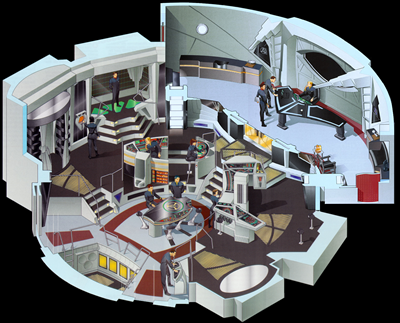 The Operations Center (or Ops) on Cardassian stations, such as Deep Space 9, was a circular compound located at the top of the main structure, with overhead windows giving a view of the stars and ships docked at the upper docking pylons. Unlike Federation styled Operations Centers, the Cardassian centers featured an asymmetrical design with a centralized Mission Operations table in the center of the room and support stations positioned around the center. Despite Starfleet performing multiple refits to DS9 throughout its lifetime, the styling of the station was not upgraded and maintains the Cardassian aesthetics of its builders. Twin turbolifts provided access to Ops.
Unlike on starships the primary controls of the station were only accessible from this one location in an area affectionately known as "the pit." Many functions that would have been performed in the Engine Room of a starship were performed from this location, which was positioned directly below the viewscreen and allowed the Station Commander to hide signs of weakness because crucial repairs could be performed out of sight during hails. The Engineering console on the upper level of Ops supplemented the functions of the pit and allowed oversight of all systems aboard the station.
Ops contained a variety of specialized areas including the Commander's Office, a Transporter, and a large Viewscreen. The isolation of command functions to Operations made it a prime target for hostile forces, particularly when it was Terok Nor, as the risk of a Bajoran revolt was significant. In order to minimize such risks, Ops could be sealed off from the rest of the station if necessary. Also unlike Starfleet designs, the Command Station of DS9 was located within the Commander's Office, which was designed under Cardassian principles that all were required look up to the Commander's Office. The use of the Commander's Office also served to somewhat isolate the Station Commander to a degree from others.
Promenade
 The hub for Deep Space 9's civilian activities, the Promenade was a large, multi-level public space with broad circular walkways ringing around the upper levels of the station's central core. The lower levels of the Promenade housed shops, restaurants, and other facilities while the upper level provided stunning views of the Bajoran Wormhole and neighboring space through the tall, ovoid viewports. Various decorations were located throughout the Promenade and spiral staircases linked the upper and lower levels of the Promenade. Seating areas were available for patrons to rest; however, loitering was actively discouraged on the Promenade.
 The Promenade served as the primary public meeting place on Deep Space 9, offering places to congregate and socialize. As a center for business and commerce a number of essential station facilities were situated on the Promenade, including the Bajoran Temple, Infirmary, and the Security Office. The businesses on the Promenade (which includes Quark's Bar, Grill, Gaming House and Holosuite Arcade) were collectively represented by the Promenade Merchants' Association and no one could conduct business on the Promenade without being licensed by this organization. Several airlocks and turbolifts linked visitors and station personnel access to the Promenade from the docking pylons, docking ring, and habitat ring.

Infirmary
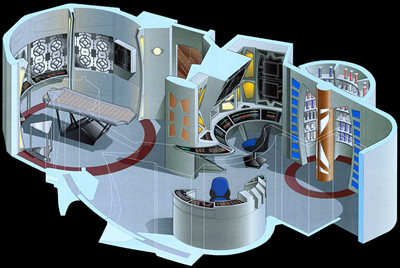 The primary medical facility aboard Deep Space 9, the Infirmary was located on DS9's lower level of the Promenade in the central core. Overseen by the Chief Medical Officer (CMO), the Infirmary has a support staff consisting of both Starfleet and Bajoran medical practitioners available at all times. While it has maintained its Cardassian design, the Infirmary has undergone significant upgrades during its tenure and features many of the same comforts as an Infirmary on a Starfleet built station. Despite this, due to its relatively low security, the Infirmary was sometimes the target of thieves and looters.
Patients entered the Infirmary through the combination Chief Medical Officer's Office and Laboratory located in the exact center of the compound. The office was an area where the CMO could work on projects, but, unlike on a starship, the office lacked privacy that many doctors in Starfleet were accustomed to. A small laboratory facility was attached to the office to allow personnel to monitor experiments or run tests during their duty shift. A full pharmacy was available in the lab area with some controlled substances available for administration.
Located to the left of the lab was the Examination Room. Equipped with a surgical bed, the Exam Room was used to diagnose and treat patients that visited the Infirmary. A large, sophisticated sensor cluster was installed directly above the surgical bed that provided detailed information about a patient's condition. Limited surgical procedures could also be performed in the Exam Room as needed. In addition to the Exam Room, an Intensive Care Unit was attached to the Infirmary's Lab. Containing five biobeds, the Intensive Care Unit was used for patients that needed to be admitted to the Infirmary to receive medical care.
Quark's Bar, Grill, Gaming House and Holosuite Arcade
 One of the most popular attractions on Deep Space 9's Promenade, Quark's Bar, Grill, Gaming House and Holosuite Arcade (commonly known as Quark's), is a multi-level restaurant that drew crowds of travelers and station inhabitants with its offerings of drink, food, and gaming. Established by Quark, a Ferengi entrepreneur, Quark's was centrally located on the Promenade and was three stories tall with the central portion of flooring of the second and third levels cut out with railed balconies overlooking the lower levels. Quark's featured a variety of entertainment options including live music and occasionally cut-price drinks during happy hour. Headquarters of the Promenade Merchants' Association, business in Quark's was conducted in gold pressed latinum.
The main entrance to Quark's was on Level 1 and featured the bar, gambling tables, and tables and chairs where customers could socialize. A large number of drinks and brightly colored drinking glasses were stored behind the bar, along with two replicators and a computer console. The central area of Quark's was brightly lit, but the peripheral areas had lower lighting to offer more privacy to customers. The casino section of Quark's took up most of the central area on Level 1 and featured a number of gaming tables, including a Dabo wheel and Tongo. A distinctive yellow and red mural extended up through the cut-out section of all three levels and served as the logo for Quark's while the upper levels provided more seating options as well as the holosuite arcade on the third level.
While Quark's on DS9 is the flagship restaurant of Quark's Bar and Holding Company, Quark himself has long since retired as the host of the bar on DS9. Instead, a holographic replica of Quark currently serves as the host for this location with longtime patron Morn taking over as the Business Manager. Waiters at Quark's were mostly Ferengi, while the Dabo Girls were hired mainly for their appearance, distracting gamers. Unlike most Ferengi establishments, Quark's employees were represented by the Guild of Restaurant and Casino Employees, an employee union.
Security Office
 Located on the lower level of the Promenade, the Security Office serves as the control center for Deep Space 9's security operations. Primarily used for administrative purposes, the Security Office kept records of the work of the small army of Security personnel serving on the station.
In many ways the unassuming appearance of the Security Office is designed to lull criminals into a false sense of security. The Security Office is a small room with a large computer desk and seating for two guests for meetings. The built in displays constantly monitored the security situation aboard the station, providing at a glance detail for the Security Chief. Additional displays built into the walls provided information on criminals being sought by station security, as well as the ten most wanted criminals within the Bajoran Sector. A weapons locker stored Phaser Rifles that could be distributed to personnel within a moment's notice.
Deep within the Security Office were the station's Holding Cells, a type of prison. Heavily guarded and monitored, three Holding Cells were available in this compartment for criminals that had been arrested by Station Security. Spartanly adorned, the Holding Cells comprised only three benches that could be used for either sitting or sleeping by the fugitives being held there. When in use nonlethal force fields engage to keep the incarcerated separated from the general population and unable to escape. A small monitoring console was used to control and observe the prisoners and was rarely unmanned while the holding cells were in use.
Science Laboratory
 The Science Laboratory on Deep Space 9 was a specialized room setup for work in experimental or observational science. When first activated by Starfleet in 2369 the Science Labs on DS9 were limited in capability, but the labs of today are no less capable than their counterpart labs on Federation starbases and starships.
The primary laboratory complex on DS9 is located in the lower levels of the Central Core and features a plethora of square shaped labs filled with a combination of Cardassian and Federation equipment. The dominant feature of the lab was the centrally located diagnostic table and overhead sensor cluster. The diagnostic table incorporated the controls for the overhead sensor cluster and had a built-in computer terminal that allowed quick access to scan results. While there was seating for only a single technician, the diagnostic table allowed up to four people to work simultaneously. The sensor unit above the table included its own touchscreen keypads that could be used to program scan routines, but verbal commands were also accepted.
Ward Room
 On Deep Space 9 the Wardroom was a multipurpose room that was used by senior personnel as a conference room, though its large area allowed it to be used for a variety of other purposes including diplomatic ceremonies and other ceremonial events. The Wardroom was located below the Promenade in the Central Core and could be partitioned off to make smaller rooms depending upon need.
In its default configuration the Wardroom was a large, narrow room that featured five large octagonal windows that looked out into space. Unlike other locations within the station that maintained the Cardassian aesthetic, the Wardroom was updated to Starfleet standards and incorporated LCARS based displays and Starfleet rather than the Cardassian furnishings utilized elsewhere on the station. A long illuminated table capable of comfortably seating 14 people was positioned in the Wardroom for formal meetings and a small lounge area with sofa's offered an informal seating area for discussions. Twin doors allowed attendees access to the Ward Room from Level 13.
Engineering Platform
The Engineering Platform (formerly known as the Fusion Reactor Core) comprised the lower section of the Central Core and was the primary maintenance area aboard Deep Space 9. While many of the Engineering functions were controlled from the Operations Center, the Engineering Platform contained Engineering and support facilities for the station, including the six Fusion Reactors that provided power to Deep Space 9 and their Deuterium Fuel Tanks. The Main Computer Core for DS9 and its cooling systems were fitted into this area as well, offering priority access to necessary power and maintenance. Often the Chief Engineer and the Engineering Team worked out of the workshops located in this area.
Computer Processor Control Room
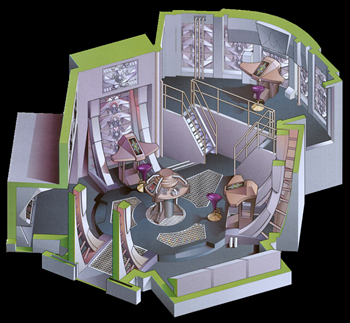 The Computer Processor Control Room on Deep Space 9 is a roughly octagonal shaped, split-level room entered through a sliding door on the lower level. An industrial location, the Processor Control Room is not as refined as the rest of the station and lighting levels are lower than those on a Starfleet installation with much of the illumination coming from the computer terminals and lighting strips. Centrally located within the room is a large, standalone situation table that provides users with direct access to the computer systems of the station. Three supplemental access stations are located on this level, allowing personnel access to complete maintenance and other alterations as needed. Large bulkhead monitors provide an overview of all commands being given to the main computer at a given time, a holdover from the station's days under Cardassian control.
 As with the Operations Center, the Supervisor's console is located on the upper level gantry of the Processor Control Room and provides priority control over any computer function aboard the station. A small set of staircases lead to the upper level workstation, which allows the supervisor direct observation of any technician and their activities. In an emergency situation the supervisor could lock down the entire computer system from his one location.
Reactor Control Room
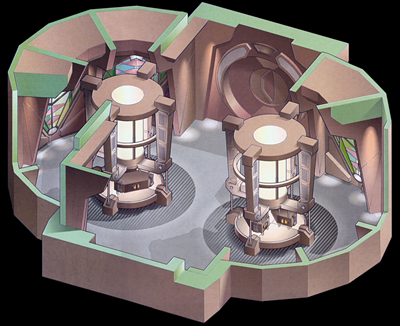 While most engineering and maintenance functions for the station are controlled from Operations, the Reactor Control Room allows for direct control over the six fusion reactors of Deep Space 9. Located in the center of the Engineering Platform, the Reactor Control Room and its functions are highly automated and secured with access provided through a single airlock assembly located within the room.
Upon entry into the room personnel immediately see the two large Electroplasma System conduits located parallel to one another in the center of the room. Massive structures, these conduits are directly connected to the energy generators for the station itself and have built in monitor consoles providing detailed diagnostics of the station's EPS distribution network. Located at the base of each conduit, technicians could access the isolinear circuitry to perform maintenance work on the EPS network, make changes to the system, or access the monitoring equipment. A large bank of computer monitors are located along the rear bulkhead across from the entrance, allowing technicians at-a-glance status reports.
One of the last sections of DS9 constructed, the Engineering Platform's Fusion Core is perhaps one of the most dangerous areas on the station should it become unstable. In simulations an overload of the Reactor Core caused a cascade reaction that would obliterate anything located within a hundred kilometers of the station during the detonation. To help safeguard lives, the entire Engineering Platform could be ejected from the station in an emergency from this location or the Operations Center to help prevent a catastrophe.
Crossover Bridges
Crossover Bridges were components of Nor Class Cardassian space stations that were used to connect the Central Core of the station to the Habitat Ring and to the outer Docking Ring and Pylons. Primary Crossovers connected the Central Core to the Docking Ring, while Secondary Crossovers extended to the Habitat Ring alone. The Bridges were constructed to be highly resilient and were comprised of 26% Kelindide, 70% Rodinium, and 4% Toranium, the same composition as the Docking Pylons themselves.
Habitat Ring
The Habitat Ring was the inner ring of the station's structure and was intended primarily for the housing of most of the station's permanent and semi-permanent residents. The Habitat Ring itself was comprised of five levels that contained the Residential Quarters aboard the station. In its current configuration, DS9 incorporates 452 large residential quarters and 231 smaller units that may be assigned. The assortment of options is a result of the Cardassian Occupation of Bajor as the larger cabins were intended for the usage of the Cardassians overseeing the Occupation while the smaller options were assigned to the lower ranked military personnel. In total DS9 could comfortably house 7,000 people.In addition to the accommodations, the Habitat Ring also served several military applications. Several supplemental security compartments, including the station's Armory, were located in the Habitat Ring, with the Armory requiring Level 7 Security Clearance. Dividing the Habitat Ring into three equal sections, the Weapon Sail Towers were three large protrusions which contained most of the station's external armaments. In addition to these functions, the Habitat Ring incorporated six landing pads, which were used by Starfleet's runabouts and other small craft to dock within the station.
Residential Quarters
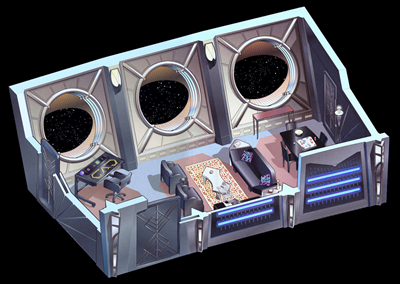 Located throughout the Habitat Ring, the Residential Quarters aboard Deep Space 9 were the primary accommodations on the station for personnel, visitors, and other guests. Varying in size and detail, the Residential Quarters on DS9 have retained their Cardassian styling.
The Residential Quarters consisted of at least two compartments, with the largest accommodations having as many as five distinct compartments for occupants. Each cabin consists of, at minimum, a comfortable living room with a sitting area and a bedroom chamber for sleeping. Several large, octagonal windows provided a thrilling view into space in most of the available Quarters, while a replicator unit provided meals. Quarters were, however, highly modular with some units incorporating multiple bedrooms, office space, or additional seating areas. Furnishings for the Residential Quarters were at the discretion of the occupant, but many retained the historic Cardassian styled furniture that had been on the station since its inception.
Docking Ring
The Docking Ring was the outermost ring of the station's superstructure and was used primarily for the docking of vessels visiting Deep Space 9. Twelve large docking ports were distributed around the perimeter of the Docking Ring, and numerous cargo bays were connected to these facilities for the moving and storing goods.Aboard Nor Class stations the Docking Ring also housed a series of Reaction Control Thrusters along its outer edge. Similar in design to those used aboard a starship, only far more powerful, the thrusters on DS9 were primarily intended to help the station maintain orbital position when it was originally constructed in orbit of Bajor. Shortly after the discovery of the Bajoran Wormhole, however, Chief O'Brien had successfully modified the thrusters to move the station a short distance to the mouth of the Wormhole. Supplemental Shield Generators were installed in the Docking Ring to help defend the station in the event of attack; however, overwhelming weapons fire directed at the outer Docking Ring could cause the station to lose main power to the shields.
Cargobay
 Dominating the Docking Ring, Cargobays were a general-purpose storage facility aboard Deep Space 9.
A variety of Cargobay layouts were available aboard Deep Space 9, with some Cargobays taking up relatively little space while others were cavernous compartments. Several Cargobays were equipped with exterior pressure doors that could be used to quickly transfer cargo, but many also were fitted with a standard airlock door that allowed access to the vessels docked at the station. Ramps were placed near many airlocks within the Cargobays for ease of transfer by the crews and passengers of the freighters into the station.
The majority of 250 Cargo facilities within the Docking Ring were utilized by independent and civilian interests, with Starfleet supplies being moved to specialty Cargobays located elsewhere in the station. While the loading and offloading of cargo was the responsibility of the freighter crews transporting the materials, Station Security maintained a vigil over the storage compartments to help prevent trouble.
Docking Pylon
The Docking Pylons were a series of six large structures attached to Deep Space 9's Docking Ring. Each pylon was generally referred to by its position relative to the station's horizontal axis and was given a designated number for ease of access and understanding by the station's personnel. At the end of each of the pylons were generalized docking bays that were designed to allow larger starships to successfully dock with the station. In addition to their official uses, the Upper Pylons, especially Upper Pylon Two, were popular with people wanting to get a good view of the Bajoran Wormhole and ships departing the station.In addition to their role of allowing vessels to dock, when originally constructed these sweeping modules contained the large ore processing facilities that were used by the Bajoran slaves to process needed minerals for their Cardassian overlords. Following the Cardassian Occupation of Bajor the ore processing functions of DS9 were suspended, but resumed limited operations in the early 25th Century due to resource losses caused by the Borg during their attack at the 250th Frontier Day.
Assigned Vessels
U.S.S. Defiant NCC-74205-C
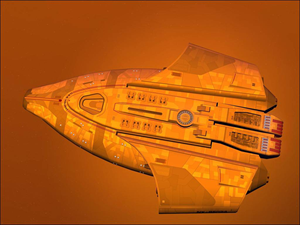 The U.S.S. Defiant (NCC-74205-C) is a Valiant-class escort commissioned in 2432 to address tactical vulnerabilities exposed during the 2420s. Built at the Bajoran Okana Shipyards, its launch was fast-tracked to 2434 following the loss of the Defiant-B during the 2433 Bajoran Crisis.
This 211-meter "pocket battleship" features quad pulse phaser cannons and ablative armor. A 2435 refit added advanced alloys, electromagnetic shielding, and "Deep Space Awareness" sensors to monitor the Typhon Pact. Initially serving as a law enforcement vessel against the Orion Syndicate, the Defiant became the primary mission support ship for Deep Space 9 under Captain Loatha Targaryen in 2436.
The vessel was instrumental in sabotaging hostile technology, including Tholian "Wormhole Drive" prototypes. By 2439, it remains a vital anchor for regional stability alongside the U.S.S. Enterprise-H (under Captain Wilkan Targaryen), serving as a "first-on-scene" responder at the Bajoran Wormhole amidst fracturing Khitomer Accords.
For more information on the U.S.S. Defiant, please see the database article.
Rio Grande Class Runabout
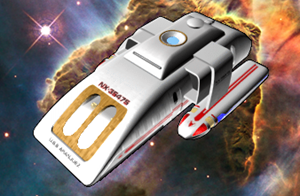 The Rio Grande Class is a premier next-generation scoutship engineered at the Bajoran Okana Shipyards for low-risk or diplomatically sensitive assignments. Measuring 19.3 meters in length, this compact vessel serves as a tribute to the historic U.S.S. Rio Grande, which discovered the Bajoran Wormhole. Despite its small footprint, the craft provides short-duration, long-range capabilities, allowing it to operate independently for up to three months.
Designed with a crew of two and a sustained top speed of Warp 6.9, the class emphasizes spatial efficiency and modularity. Its central mission compartment and dorsal mission pod can be swapped for cargo, medical, or tactical configurations without specialized facilities. Heavily armed for its size, the Rio Grande features Phaser Arrays and Photon Micro-torpedoes, making it a self-sufficient "pocket" auxiliary vessel. It has successfully replaced the aging Orion Class for planetary and cultural surveys, offering superior versatility and stateroom accommodations for extended missions. By balancing high-resolution reconnaissance with tactical escort capabilities, the Rio Grande remains a staple of Starfleet’s auxiliary fleet in the 25th century.
Rio Grande Class Vessels Assigned to Deep Space 9 | |||
| U.S.S. Holana | Landing Pad A | Named in honor of the Holana River on Bajor. | |
| U.S.S. Rio Grande | Landing Pad C | Named in honor of the Danube Class U.S.S. Rio Grande. | |
| U.S.S. Yolja | Landing Pad E | Named in honor of the Danube Class U.S.S. Yolja. | |
Key Deep Space 9 Personnel
 Commodore Gunisi Taalu Bajoran Male |
 Captain Werdo Shuyi Bajoran Male |
 Commander Stilil Nekaim Romulan/Vulcan Male |
 Lieutenant (J.G.) Luka Maier Human Male |
 Lieutenant (J.G.) Maarni Aiwi, MD Bajoran Female |
 Lieutenant Hezaar Gorn Female |
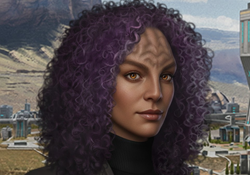 Lieutenant Commander Veveeva Boslic Female |
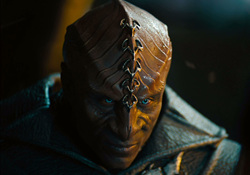 Lieutenant G'Tal Klingon Male |
 Morn Lurian Male |
Categories: No categories found